How to write a tagline people remember
Most small business taglines say nothing. Learn what a good one does, write fifty in an hour and test the best before it goes on your sign or website.
A tagline is a short line that sits next to your name and tells people why they should care. Most small business taglines say nothing at all. This lesson shows what a good tagline does, gives you a method to write fifty in an hour and explains how to pick, test and check the winner.
What a tagline is, and what it is not
People use several words for similar things, and mixing them up leads to muddy writing. Here is the difference.
- Tagline. A short line that stays attached to your name or logo for years, such as "Just Do It".
- Slogan. Often a line for one campaign, which changes when the campaign does. Many people use the word as a synonym for tagline, and that is fine in everyday talk.
- Headline. The big line at the top of a page. It can change from page to page.
- Value proposition. The fuller explanation of what you offer and why it is better, usually a sentence or two.
- Mission statement. A statement of purpose, mostly for the people inside the business.
A tagline does not have to do everything. It has to give a clear, memorable idea in a few words.
There is also a warning. Famous brands can use vague lines because they have spent decades filling them with meaning. "Just Do It" works because of everything Nike has done since 1988. A small business does not have that history. Your first screen must say what you do, for whom and where, in plain words. A clever line can sit on top of that clarity. It cannot replace it.
What a good tagline does
- It is short. Three to seven words is the usual range.
- It is specific. It says something about your business, not about any business.
- It is true. You can deliver on it every day.
- It is yours. A competitor could not use it without being wrong.
- It is easy to say. It sounds natural out loud and on a phone call.
- It is positive. It says what you do for people, not what you avoid.
- It lasts. It does not depend on a price, a year or a trend.
Six patterns to start from
You do not need to wait for inspiration. Most good taglines follow one of a few patterns. These examples come from our concept designs, so you can see them in context.
Say what you are, plainly
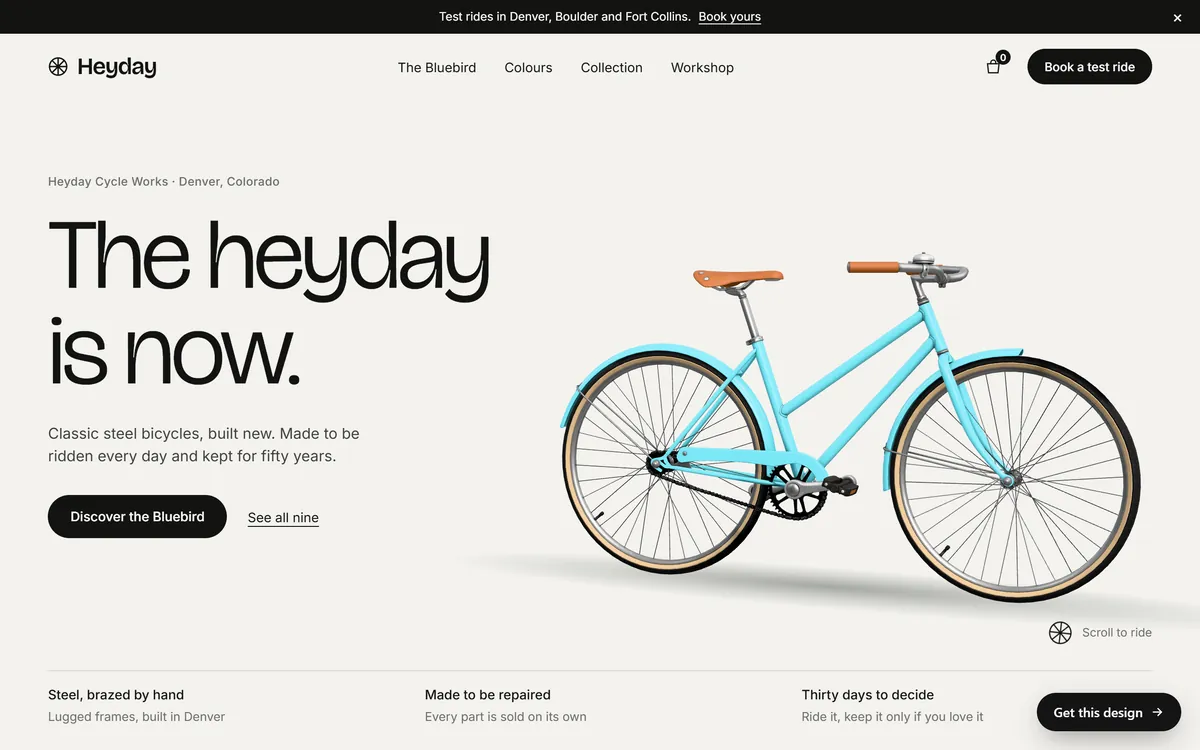
The simplest tagline is a clear description with a bit of rhythm. On the Heyday home page, a bicycle maker's headline is "The heyday is now." and the line under it, "Classic steel bicycles, built new.", does the work of a tagline. Anyone who reads it knows what the business sells.
Promise a result
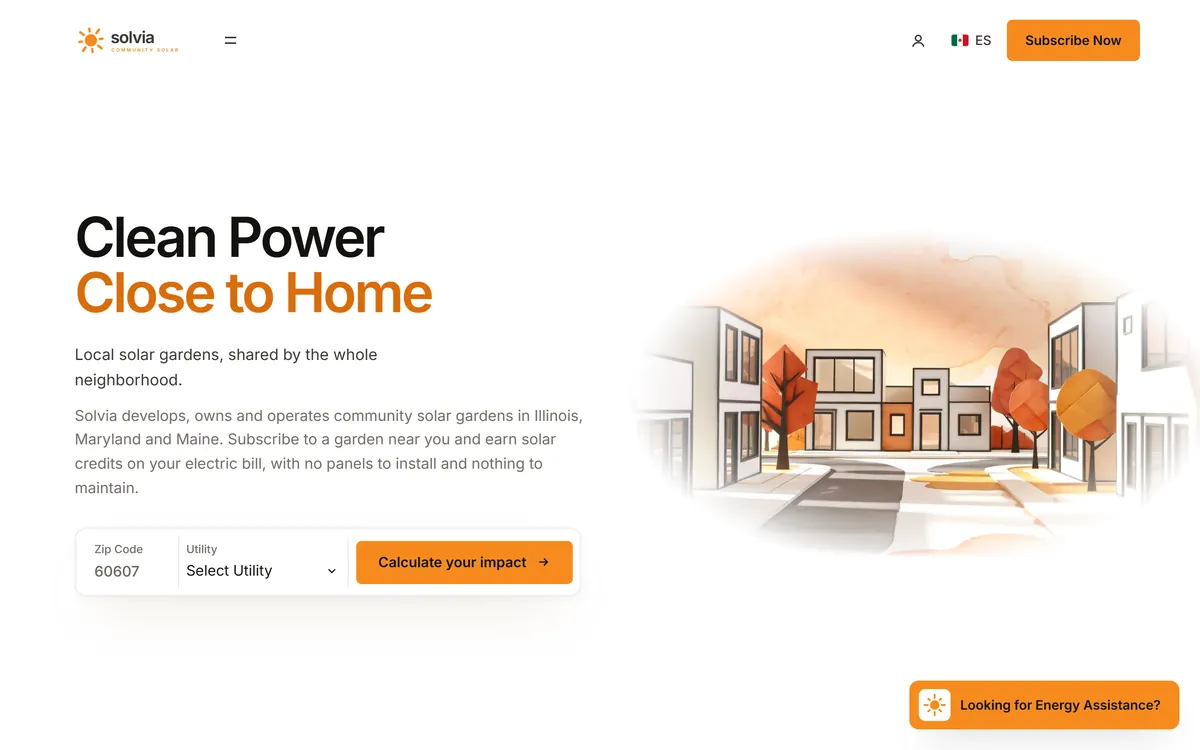
Say what the customer gets. Solvia, a community solar company, writes "Clean Power Close to Home". It states a benefit, clean power, and a place, close to home, in five words.
Set two ideas against each other
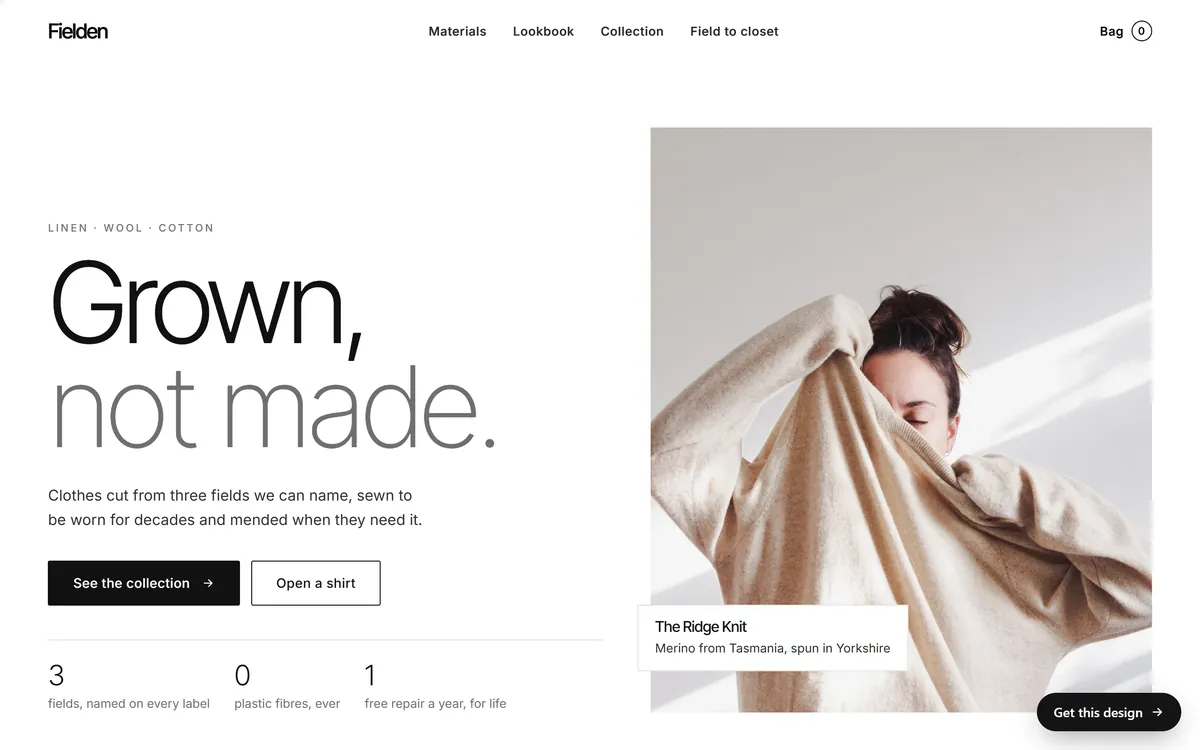
A contrast makes a line stick. Fielden, a clothing brand, uses "Grown, not made." Two short phrases, two beats, one clear point of view. The pattern is common, so it works only when the two halves are really yours.
Make a promise you keep
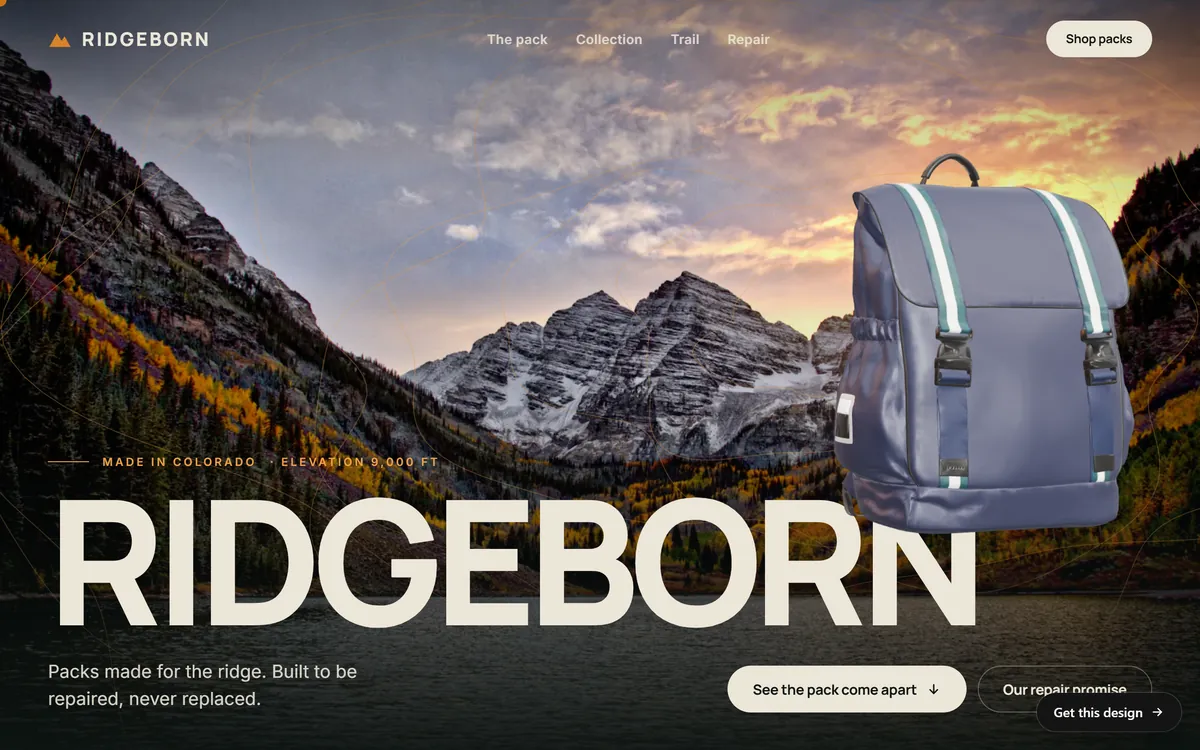
A line that commits to something gives people a reason to trust you. Ridgeborn, an outdoor gear brand, writes "Packs made for the ridge. Built to be repaired, never replaced." The second sentence is a promise, and it sets the brand apart from every disposable bag.
Name your place or your craft
Local pride can be a strong hook. A made-up bakery in Tucson might say "Tucson's bread, baked before sunrise." It names the place, the product and a detail that sets it apart. This pattern suits businesses that serve one area.
Invite or challenge
Some taglines speak to the customer directly. Nike says "Just Do It" and Apple said "Think Different". BMW promises "The Ultimate Driving Machine", and M&M's says "Melts in your mouth, not in your hands". These work because the brands built meaning around them. For a small business, a direct invitation can still be powerful if it matches what you offer, for example "Ask us before you buy."
Write fifty taglines in an hour
Step 1: Fill in one sentence
Write: "We help [who] [do what], so they can [result], unlike [the usual alternative], because [what makes us different]." Fill it in as plainly as you can. This sentence is the raw material, not the tagline.
Step 2: Collect four lists
Write ten benefits you offer, ten phrases your customers use, ten words about the feeling you want and ten proof points, such as years in business, places served and things you do that others do not.
Step 3: Write fast, using the six patterns
Set a timer for twenty minutes. Write five lines for each pattern, and do not judge them yet. Bad lines often contain the seed of a good one.
Step 4: Cut
Run two tests. The swap test: put your biggest competitor's name on the line. If it is still true, cut it. The cliché test: remove anything with words such as quality, excellence, passion, solutions, trusted or best. Keep the five that remain.
Step 5: Say it and test it
Say each line out loud as if you were answering the phone. Ask "so what?" after each one. Then try the five-second test: show a stranger your name with the line, take it away after five seconds and ask what you do. If they cannot say, add the plain description.
Step 6: Check that it is free
Search Google for the exact phrase in quotation marks. Search the federal trademark database. A tagline can be registered as a trademark when it works as a brand identifier, but ordinary or purely descriptive phrases are often refused. Even if you cannot register yours, make sure no one in your field already uses it.
Step 7: Try it in real places
Put the winner under your logo, on a sign, in an ad headline, at the top of your website and in your email signature. Look at it on a phone. A line that is too long will wrap into a mess on a small screen.
Fix a weak tagline: four made-up examples
Weak taglines are easy to spot, and fixing them follows the same moves. Each rewrite below is for an imaginary business.
- An auto shop. Weak: "Your satisfaction is our priority." Better: "We fix it, then we explain it." The new line shows how the shop treats people.
- A dentist. Weak: "Excellence in dental care." Better: "Gentle dentistry for nervous people." It names a real customer and a real fear.
- A landscaper in Tampa. Weak: "The best landscaping in town." Better: "Gardens built for Tampa summers." It trades a boast for a local detail.
- A cleaning company. Weak: "Solutions for all your cleaning needs." Better: "Spotless by the time you get home." It describes the moment the customer cares about.
The pattern is the same each time. Replace the general word with a person, a moment or a place, and say it the way a customer would.
Where to use your tagline
- Next to your logo, as a separate, smaller line.
- At the top of your website, close to your name.
- In your social media bios and your Google Business Profile description.
- In your email signature and on your business card.
- On packaging, vehicles and signs, if there is room.
Use exactly the same words everywhere. A tagline is not the title that Google shows for your pages. Those titles should name your service and your city, which a later lesson covers.
Claims you can back up
In the United States, the Federal Trade Commission requires advertising to be truthful and not misleading. Opinion, such as "the friendliest team in town", is usually fine. Claims that can be measured, such as "#1", "lowest prices" or "guaranteed", need evidence. If your tagline contains one, make sure you can prove it. Rules also cover claims such as "Made in USA", so check them first. When in doubt, choose a line that describes what you do, not one that ranks you.
A tagline for two languages
If you serve English and Spanish speakers, do not translate the line word for word. Rhymes, puns and rhythm rarely survive a translation. Write a Spanish line on its own, with its own rhythm, or decide that one language leads and the other supports it. Say the line to native speakers from different countries to catch an unintended meaning. Keep your promise the same in both versions.
Tagline mistakes to avoid
- Vague superlatives. "Quality you can trust" could belong to anyone.
- Clichés. "Your satisfaction is our priority" is wallpaper.
- Too clever to understand. A pun that needs an explanation has failed.
- Too long. If you cannot say it in one breath, cut it.
- A promise you cannot keep. It creates complaints and legal risk.
- Chasing a trend. Slang from this year sounds old next year.
- Copying a competitor or a famous brand. It confuses customers and invites a dispute.
- Changing it every year. Memory takes repetition.
Your tagline and your website
On a website, the tagline works best near the top, next to your name, with the plain description right under it. When we write the texts for your site, we start from what you do, who you serve and what makes you different, and we give you headlines that say it clearly. You approve every text, so a tagline you already like can go in as it is. To see how headlines and short lines sit on a page, look at our designs.
Questions people ask
What is a tagline?
A short, memorable line that stays attached to your business name or logo. It tells people what you do or why you matter in a few words.
What is the difference between a tagline and a slogan?
A tagline is a lasting line tied to the brand. A slogan is often tied to a campaign and may change. In everyday use, the words overlap, and the writing method is the same.
How long should a tagline be?
Usually three to seven words. If it needs more, it is probably a headline or a value proposition, not a tagline. Test it by saying it in one breath.
Does my small business need a tagline?
Not strictly. What you need is a clear first screen that says what you do, where and for whom. A tagline is a bonus that adds memory and personality once the basics are clear.
What makes a good tagline?
It is short, specific, true and hard for a competitor to use. It is easy to say out loud, and it lasts. It says something about your business, not about every business.
How do I come up with a tagline?
Fill in a sentence about who you help and why you are different, collect customer phrases and benefits, write many lines using the common patterns and cut with a swap test and a five-second test.
Can I trademark a tagline?
Sometimes. A tagline can be registered when it works as a brand identifier. Everyday or purely descriptive phrases are often refused. Check first, and ask a trademark attorney if the line matters to your business.
What are some examples of good taglines?
"Just Do It" from Nike, "Think Different" from Apple, "The Ultimate Driving Machine" from BMW and "Melts in your mouth, not in your hands" from M&M's are well known. Remember that they work because of years of use.
Should the tagline be part of my logo?
Keep it as a separate line. At small sizes the words in a combined logo become unreadable. Make a version with the tagline for places where there is room, and a clean version for everything else.
How often should I change my tagline?
Rarely. Customers need repetition to remember it. Change it only when your business changes in a big way, and keep the idea familiar so people still recognize you.
Want a website that does all of this? Start your site