How to write a clear offer and prices page
Visitors who cannot tell what they get, what it costs or what happens next leave. Here is how to write your offer and prices page in plain words.
Visitors who cannot tell what they get, what it costs or what happens next leave. This lesson shows how to write your offer in plain words and how to build a prices page, with or without numbers on it. To keep things honest, every price written in this lesson belongs to an imaginary business.
An offer says what, for whom and on what terms
An offer is not a discount. It is the full answer to "what exactly do I get, and what do I have to do?" A clear offer has three things: what you give, who it is for and the terms. The terms are the price, the conditions, the time frame and what happens after the visitor says yes.
When any of the three is missing, visitors fill the gap with their own fears. They imagine hidden fees, long contracts and surprises. A clear offer takes those fears away before they appear.
The seven parts of a clear offer
- Who it is for. One line that lets the right person say "that is me".
- What they get. A short list of what is included, in plain nouns.
- How it works. Three or four steps from "yes" to "done".
- What it costs, or how the cost is set. Section by section, below.
- What is not included. The things people often assume are covered.
- What happens after they say yes. The next hour, the next day, the next week.
- How to start. One button, with words that say what it does.
You can write all seven in a single page, or spread them across a service page and a prices page. What matters is that nothing is missing when the visitor is ready to decide.
Decide whether to show your prices
There is no single right answer. It depends on how you sell. Here are the three common approaches.
- Show the price. Best when the price is fixed or nearly fixed: a haircut, a class, a monthly plan. Visitors who cannot afford it leave early, which saves both sides time.
- Show a starting price or a range. Best when the price depends on size or options. Only use a "from" price when many customers really pay close to it. A "from" price that nobody gets feels like a trick.
- Show how the price is set. Best for custom work. List what changes the price, say what a visitor needs to send, and explain how a quote works.
To decide, ask yourself one question: can a visitor tell, before calling, whether you are in their range? If they can, you are fine. If they cannot, they may call, feel awkward and never come back, or they may not call at all.
Put what is included next to the button
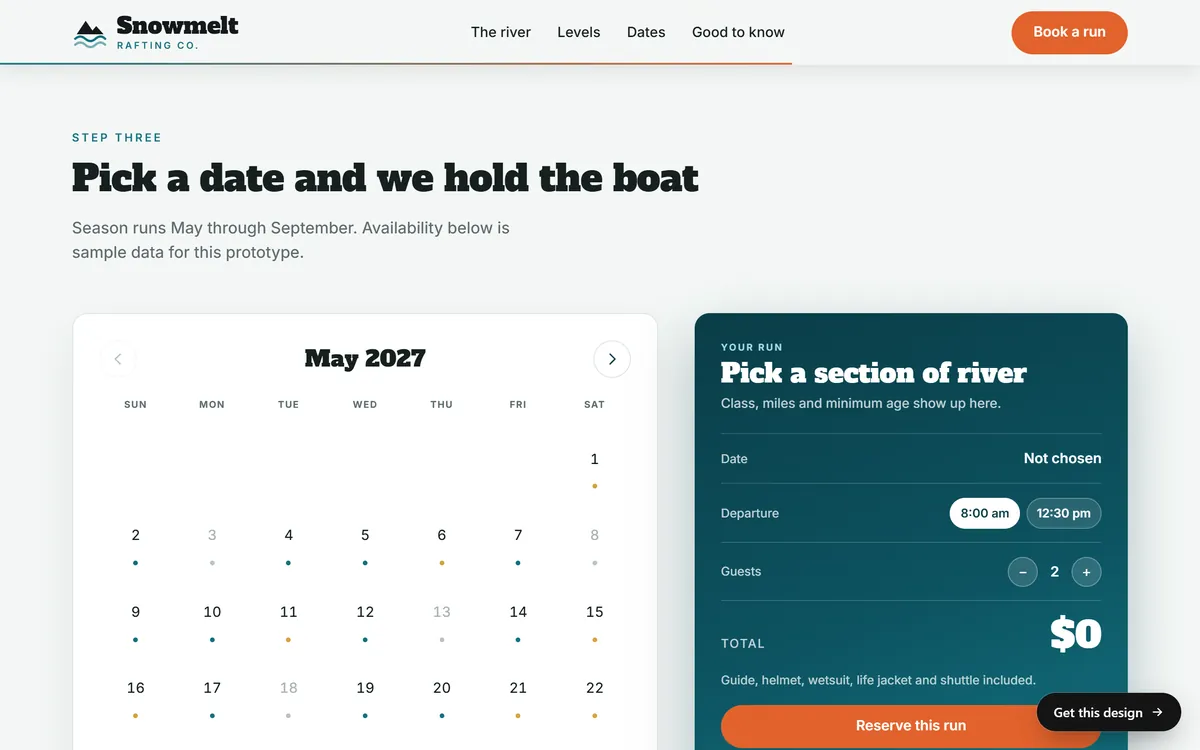
The best place for your terms is next to the action. Snowmelt Rafting Co., a concept site, ends its page with a booking area called "Pick a date and we hold the boat". The visitor picks a date from a calendar, and a summary panel shows the date, the departure time, the number of guests and the total. Directly above the "Reserve this run" button, one line says what every seat includes: guide, helmet, wetsuit, life jacket and shuttle. No one has to scroll or guess.
Use the same idea on your page. Wherever a button asks for a decision, put the main terms within sight of it.
When the price is on request, say how it works
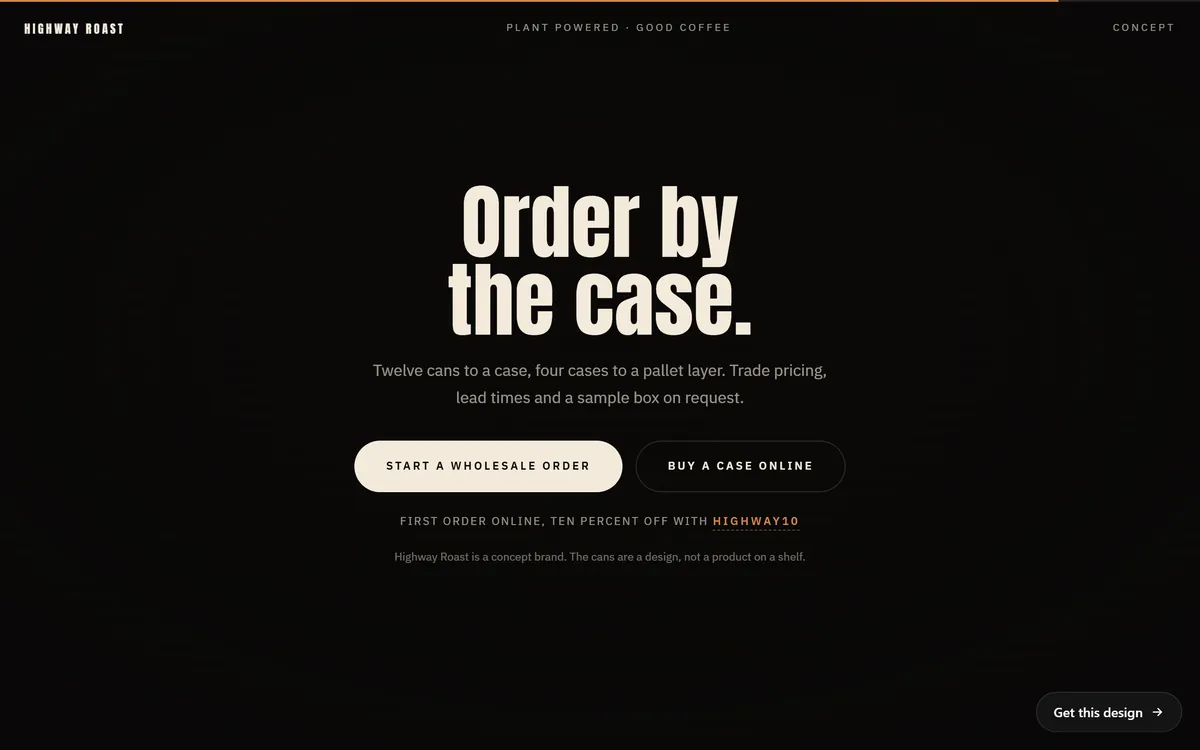
Many businesses cannot print a price, and that is fine, as long as the visitor still knows what to expect. Highway Roast, a coffee concept site, sells by the case. Its page says that a case holds twelve cans, that four cases make a pallet layer, and that trade pricing, lead times and a sample box are available on request. Two buttons follow, one for a wholesale order and one for buying a case online, so two kinds of buyer each find their way.
When you do this, answer three things: what will you send, how will it be sent and what do you need from the visitor? If you can promise a time, such as a reply within one business day, say it only if you will keep it.
Packages: keep them to three
If you sell in packages, three is a good number. With more, the choice gets harder. For each package, give it a plain name, a line about who it is best for and a list of what it includes. Make the differences easy to compare, and mark the one you think suits most people.
Here is an example for an imaginary dog groomer. The prices are made up for this lesson and are not a guide to what anything costs.
- Bath and brush, $45. Best for short coats. Includes a bath, blow-dry, brush and ear cleaning.
- Full groom, $70. Best for long coats. Includes everything in the bath, plus a haircut and a nail trim.
- Puppy first visit, $35. Best for dogs under six months. A gentle introduction with a short bath and a nail trim.
Notice what is missing from most real price lists: a line for what is not included. A good page adds one: "Matted coats, flea treatment and special shampoos are priced separately." That sentence saves arguments later.
Explain what changes the price
If prices vary, tell people why. A short list works well: size, materials, number of visits, distance, urgency, extras. For each item, add a few words about its effect: "Larger homes take longer" or "Rush jobs cost more". People accept a high price when they understand the reasons. They do not accept one that appears from nowhere.
Write your promise in plain terms
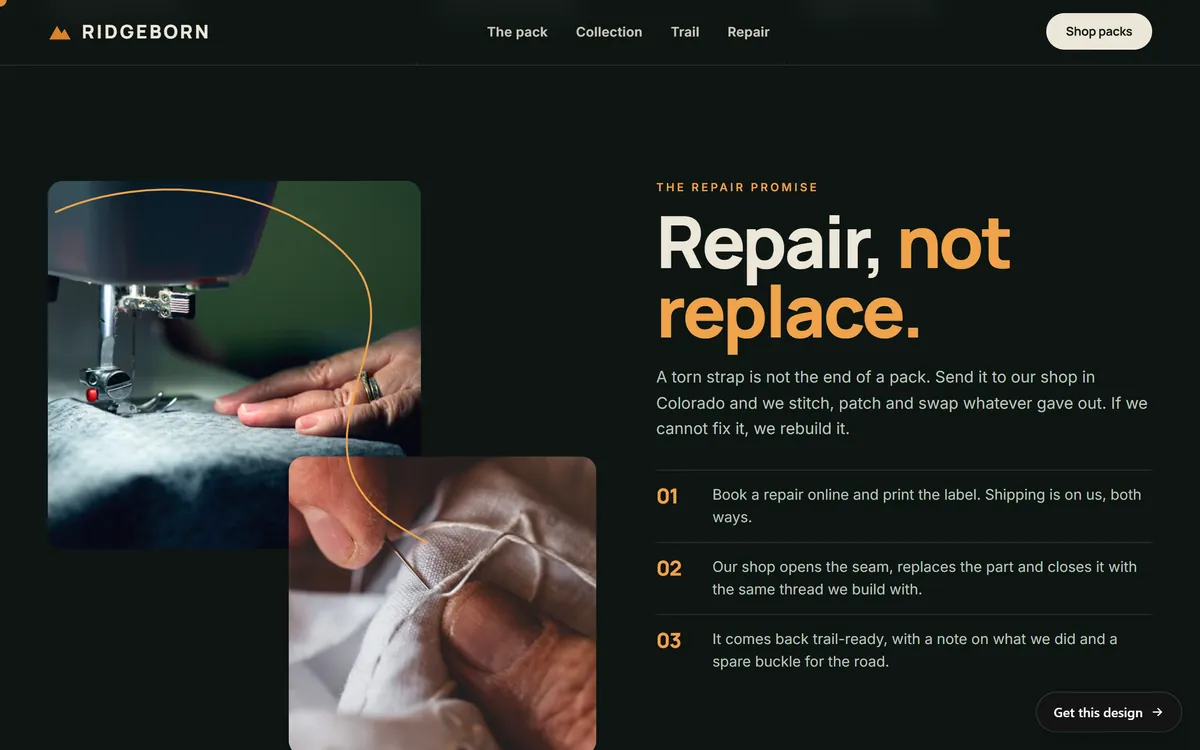
A promise lowers the risk of saying yes, so it deserves clear words. Ridgeborn, an outdoor gear concept site, writes its repair promise as a short story in three steps. A torn strap is not the end of a pack, the page says, and then it lists the steps: book a repair online and print the label, with shipping paid both ways; the shop opens the seam and replaces the part; the pack comes back ready for the trail with a note on what was done. The visitor can see exactly what happens after they say yes.
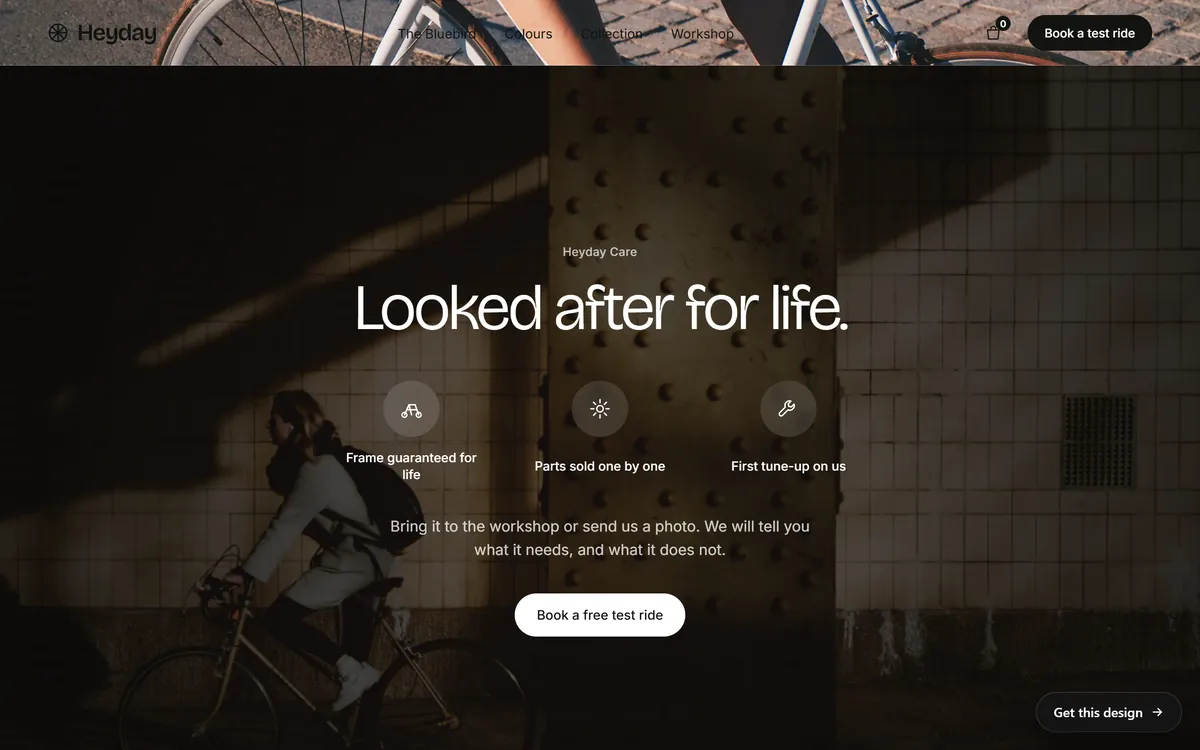
Heyday, a bicycle concept site, keeps its promise even shorter: "Looked after for life", with three lines under it: frame guaranteed for life, parts sold one by one and first tune-up on us. Then one button.
When you write a guarantee, say what is covered, for how long and how to use it. The FTC's guide for small businesses says that if an ad mentions a guarantee, it should show where to find the full terms, and that limits such as a time window or a return rule must be stated in the ad copy. A promise with hidden limits is worse than no promise.
Use honest price language
The Federal Trade Commission, the FTC, publishes advertising basics for small businesses. This section is a plain summary, not legal advice, so for questions about your own pages, talk to a lawyer. Several points matter for offers and prices.
- Every claim needs proof, including claims that are only implied, and the proof must exist before the claim goes live.
- "Free" has rules. A free offer tied to a purchase should not push the price of the item you must buy above its regular price.
- Sale and former prices must be truthful. A "was" price has to be real. The FTC points to its Guides Against Deceptive Pricing for the details. A "going out of business" sale is deceptive unless the store is actually closing.
- Disclosures must be clear and conspicuous. Fine print cannot take back what the headline promised, and a qualifier should sit next to the claim it changes, in plain words.
In short: do not use a price, a discount or a deadline that is not real, and do not hide a condition at the bottom of the page.
Choose a button that matches the step
A visitor on an offer page is closer to buying than anywhere else on your site, so the button matters. Use a verb and say what happens: "Book a visit", "Ask for a quote", "Start my order". If the step is a request and not a purchase, say so. "Ask for a quote" feels safer than "Buy now" when the visitor is not sure. Do not write "Submit", which says nothing.
Offer and price mistakes to avoid
- Hiding the price and the process. Visitors assume the worst.
- A price with no context. "$70" means little without what it includes.
- Surprise fees. Mention taxes, delivery and extras early, not at the last step.
- Too many options. Three packages are easy to compare. Eight are not.
- Fake urgency. A countdown that restarts or a "last chance" that is not last destroys trust.
- Vague words. "Competitive pricing" says nothing. A range or a method says something.
- Promises with hidden limits. State the terms where the promise is made.
A checklist for your offer page
- Can a stranger tell who it is for?
- Does it list what is included and what is not?
- Does it say how the price is set, or show the price?
- Are the steps from "yes" to "done" clear?
- Are the terms next to the button?
- Is every claim something you can prove?
- Does the button say what happens?
Offers, prices and Good Sites Only
We write the text of your offer pages from the answers you give us on day 1, using your own facts: what you sell, how you charge and what happens next. We do not set your prices, because those are your decision. If you want to promote one special offer, a landing page of the month can be added as a monthly service. Each stage has one round of changes, so you can adjust any term before the site goes live. You can see how real offers and booking areas look in our designs.
Questions people ask
Should I put prices on my website?
If your price is fixed, yes. If it varies, show a starting price or a range, or explain what affects it. The goal is that a visitor can tell, before calling, whether you are in their range.
What if my prices change often?
Show how the price is set and the date you last checked it. Avoid printing numbers you will not update. A stale price does more harm than no price.
How do I show prices for custom work?
List what changes the price, say what a visitor needs to send you, and explain how a quote works. A typical starting point helps if many customers really pay close to it.
What does "starting at" mean?
It means the lowest price a customer can reasonably expect. Use it only when many customers pay close to it. If almost nobody does, it feels misleading.
How many packages should I offer?
Three is easy to compare. Give each a plain name, a line on who it is best for and a list of what it includes.
Can I say my offer is free?
Only if it truly is. The FTC's small business guide says a free offer tied to a purchase should not push the price of the purchase above its regular price, and conditions must be clear. For legal questions, ask a lawyer.
How do I write a guarantee?
Say what is covered, for how long and how to use it. The FTC says that if you mention a guarantee, you should show where to find the full terms and state its limits.
Should I show a discount or a sale?
Only if the regular price is real. The FTC says sale and former-price claims must be truthful. Do not use a "was" price that nobody ever paid.
Where should I mention taxes and extra fees?
Early, near the price. The FTC's guide says important conditions should be clear and close to the claim they affect. Surprises at the last step make people leave.
What should the button on an offer page say?
It should say what happens next: "Book a visit", "Ask for a quote" or "Start my order". Avoid "Submit" and "Learn more".
Want a website that does all of this? Start your site