How to start an email list from zero
A list grows one yes at a time. Learn where your first subscribers come from, how to ask in your own words and what to say on the sign-up box.
Every email list starts with one person who says yes. Your job is to ask the right people, in the right place, with a clear promise, and to ask in a way that is honest. This lesson shows where your first addresses come from, how to build a sign-up that works and why you should never buy a list.
A list is made of people who said yes
An email list is the names and addresses of people who agreed to get messages from you. The word that matters is agreed. Anyone can collect addresses. A real list is made of people who knew what they were joining.
A simple test helps. Before you add someone, ask yourself: would this person be surprised to get my email? If the answer is yes, do not add them. If the answer is no, because they asked, you are on safe ground.
It also helps to separate two words. A contact is anyone whose address you have, such as a person who wrote to ask a question. A subscriber is a person who agreed to get your marketing emails. Only subscribers should receive your newsletter.
Permission comes first
Permission means a person chose to hear from you, and you can show how. These situations count:
- They typed their address into a sign-up box that said what they would receive.
- They ticked a box, which started unticked, to get news and offers when they booked or bought.
- They told you in person that they wanted your emails, and you wrote it down with the date.
These situations do not count:
- A business card in a stack you collected at an event.
- An address you found on a website or in a directory.
- A person who emailed you a question. Answer the question. Do not add them to the newsletter.
- A list a friend or a partner sent you.
Keep a record of when and where each person joined. Many email services save this for you when someone signs up through their form. If you collect names on paper, keep the sheet.
Why buying an email list is a bad idea
Some companies sell lists of thousands of addresses for a small price. It looks like a shortcut. It is a trap, for these reasons.
- Nobody asked to hear from you. People on a bought list do not know you. Most will ignore your message, and some will mark it as spam.
- Email services do not like it. Mailchimp, for example, says in its acceptable use policy that you may not send to purchased, rented or third-party lists, and it may suspend an account that breaks its rules. Read the rules of any service before you upload a list.
- It hurts your reputation. Gmail and other mailbox providers watch how many people mark your messages as spam. If the number grows, even your real customers can start finding your emails in the spam folder.
- The list is often poor. Addresses can be old, wrong or sold to many other senders at once.
- It does not fit your business. A small list of people who care about what you do is worth more than a large list of strangers.
The better path is slower and it works: ask real people, one at a time, and let the list grow with your business.
Where your first addresses come from
Customers you already have
This is the best place to start. People who have bought from you know you and trust you. Ask them at the counter, on the phone, after a job or when you hand over an order. Say it in plain words: "May I add you to my email list? I send one short note a month, and you can leave at any time." If they say yes, write down the address and the date.
Your website
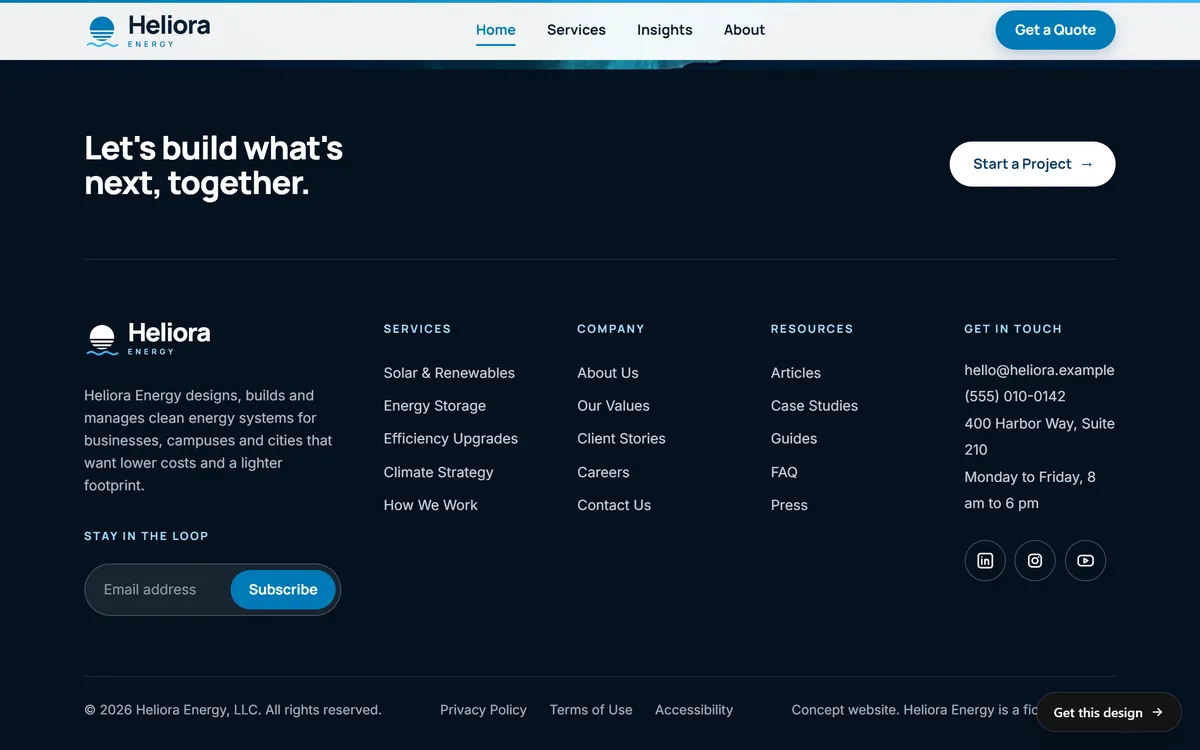
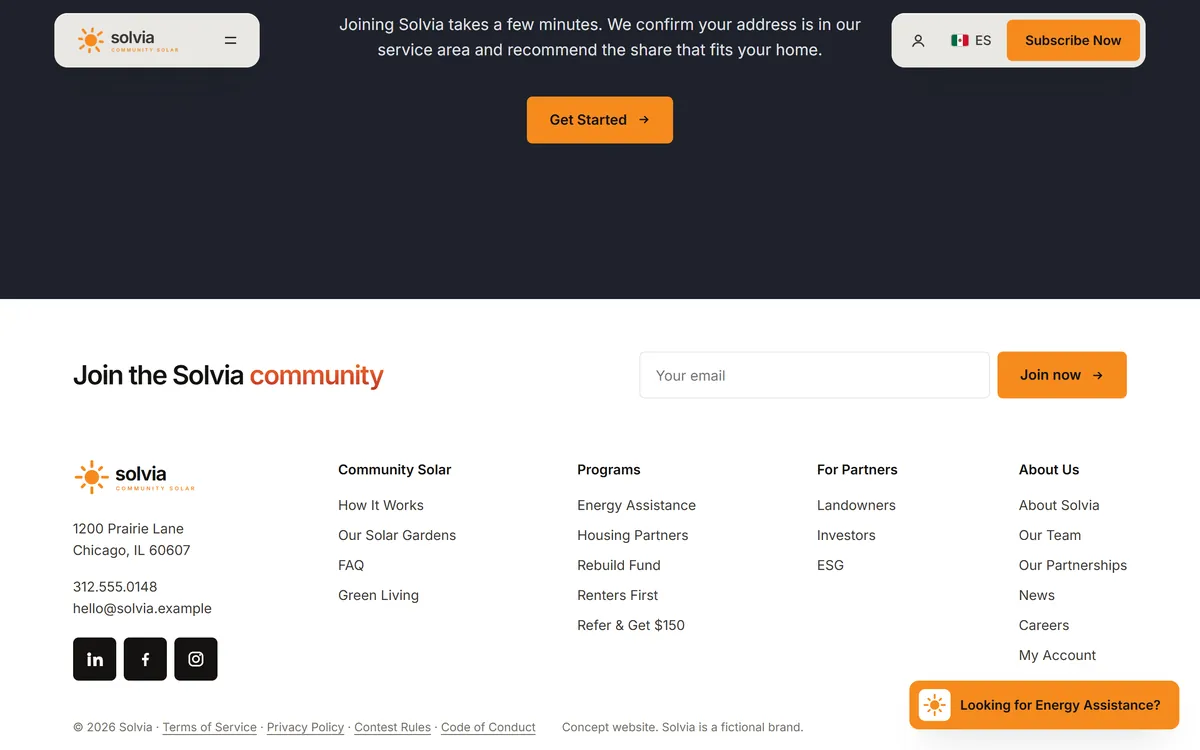
Put a sign-up box on your home page and in the footer, so it is on every page. Many sites also add a box at the end of useful pages, where a reader has just learned something and may want more. Here are two examples from concept sites.
Forms people already fill in
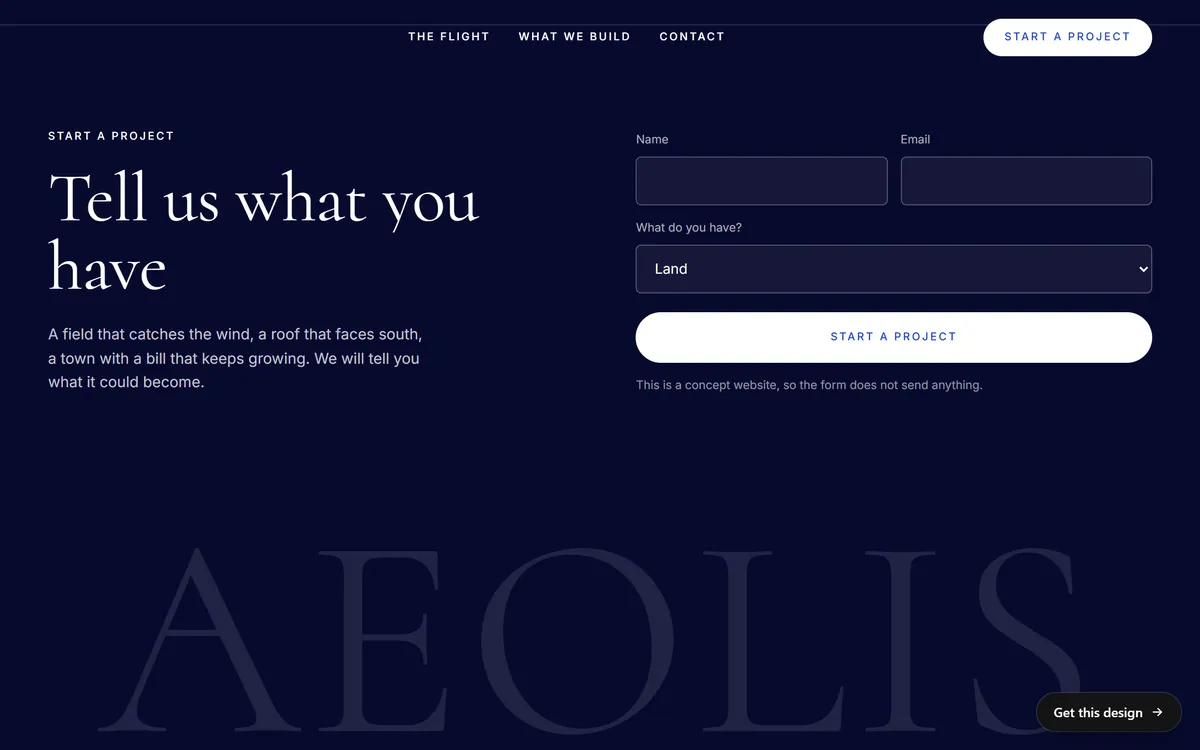
If visitors already send you a contact form, a quote request or a booking, you are already collecting addresses. They wrote to you about a job, so use that address for that job. If you also want to send them news, add a separate box, unticked, with a clear line such as "Send me news and offers." Do not tick it for them.
In person
A sign-up sheet or a tablet at the counter works well for shops, restaurants and salons. Print a short line above the sheet that says what people will get. A QR code on a receipt, a menu, a flyer, a truck or a package takes people to your sign-up page in seconds. At markets and events, people are in a good mood and you can ask face to face.
Social media
Put the link to your sign-up in your profile. Now and then, post a reason to join: what the next issue will cover, a gift for new subscribers or a preview of a new product. People who follow you are already interested, and a link makes the next step easy.
Partners and events
Ask partners who serve the same customers to mention your sign-up in their own messages. Share the link. Do not trade lists, because the people on their list did not agree to hear from you.
Put the sign-up where people already look
A box that nobody sees brings nobody. Good places are the footer of every page, a section on the home page, the end of a useful article, the page that thanks someone after a booking and your contact page. On a phone, make sure the box is easy to tap and does not need zooming.
Pop-up windows can work, but they can also annoy people. If you use one, wait until the visitor has spent a little time on the page, make it easy to close and never show it again to someone who closed it.
Keep the form short
Every extra field loses some people. For a newsletter, an email address is enough. Add a first name only if you will use it, and make it optional. Do not ask for a phone number, a birthday or an address unless you have a clear reason and you say what it is for.
The exception is a form that gives something in return for more information, such as a quote or a report. There, people expect to share more, because they get more. The next lesson looks at those offers.
Say what people will get, and how often
The best line under a sign-up box answers three questions: what will I get, how often, and what will you not do. Here are some examples you can adapt:
- One email a month with new arrivals and care tips. No sale emails.
- Four emails a year, one for each season.
- Our weekly menu every Thursday. You can leave at any time.
Then keep the promise. A clear promise lowers the number of people who mark your messages as spam, because they know what is coming.
Ask in words that sound like you
People say yes to a request that sounds human. Here are three short scripts you can adapt.
- At the counter: "Would you like our monthly note? It has new arrivals and care tips, and you can leave at any time."
- By message, to a customer you know: "Hi Maria, thanks again for choosing us. I send a short email once a month with news and tips. Would you like me to add you?"
- On your site: "Get the monthly note. New arrivals and care tips, no sale emails."
Each one says what it is, how often it comes and that leaving is easy. None of them pushes. If the answer is no, say thank you and move on. A person who says no today may say yes in a year, if you were polite.
Consider a confirmation email
With a confirmation email, sometimes called double opt-in, a new subscriber gets a message with a button that says "Yes, add me." They join the list only after they click it. This keeps out typing mistakes and addresses that belong to someone else.
The price is that some real people never click, so your list grows a little more slowly. Many email services offer both options. If you collect addresses typed by hand, such as at a market, a confirmation email is a good idea. If people sign up through a form on your site, either choice can work, as long as the welcome email goes out right away.
Treat your list with care
- Keep your list in your email service, not in loose spreadsheets on several computers.
- Never share, trade or sell your list.
- Remove people who unsubscribe, and never add them again.
- Send a welcome email soon after someone joins, so they remember why they are on your list.
- Remove addresses that keep bouncing, because they hurt how your messages are delivered.
Your first thirty days
You do not need a perfect system. This plan is enough to get started.
- Week 1: choose an email service, write your promise and create a sign-up box.
- Week 2: ask your closest customers, one at a time, in person or with a personal message. Put your sign-up link in your profiles and on your receipts.
- Week 3: write and send your welcome email.
- Week 4: send your first newsletter to the people who joined, and look at what happened.
Do not worry about numbers yet. The list grows as fast as you ask.
Sign-up lists and Good Sites Only
Contact forms are included in every site we build, and they are a good first place to meet people, because you read each message and answer it yourself. If a form offers a box to join your list, it should start unticked. Email marketing can be added as a monthly service. You can see how forms and footers look in many industries in our designs.
Questions people ask
How do I start an email list with no customers?
Start with the people you know and the people who find you online. Put a sign-up box on your site, share the link on your profiles and tell people about your business, giving them a reason to join, such as news about your opening. A small list is a fine start.
How long does it take to build a list?
There is no standard answer. It depends on how many people you reach and how often you ask. A list grows as fast as you invite people, so build the habit of asking every customer.
Can I add customers to my list without asking?
It is best not to. A customer who bought from you has agreed to get a receipt, not a newsletter. Ask first, and keep a note of the answer. Rules can differ, so if you are unsure, ask a professional.
Can I email people who gave me their business card?
A card is a reason to say hello, not a signup. Send one personal message, and ask if they would like to get your newsletter. Add them only if they say yes.
Should I buy an email list?
No. People on a bought list never asked to hear from you, email services such as Mailchimp say in their rules that they do not allow purchased lists, and it can damage how your messages are delivered.
Do I need a website to build an email list?
No, you can start at your counter or with a link from your profile. But a website gives you a permanent place for your sign-up box, and it helps people trust you before they join.
What should I say on my sign-up form?
Say what people will get, how often and what you will not do. For example: one email a month with new arrivals and care tips, and no sale emails. Keep it to one short line.
What is double opt-in?
It means a new subscriber gets a confirmation email and must click a button before joining your list. It keeps out typing mistakes and fake addresses, but it can slow growth a little.
Can I import contacts from Gmail or a spreadsheet?
You can import, but only people who agreed to get your emails. Most email services ask you to confirm that you have permission. If a contact never agreed, ask first.
How do I keep subscribers from marking my emails as spam?
Set clear expectations on the sign-up box, send what you promised, keep to your schedule and make it easy to unsubscribe. Someone who can leave with one click has no reason to press the spam button.
Want a website that does all of this? Start your site