Why email still sells more than social media
Social media helps people find you, and email helps you keep them. Here is why a list you own still matters, what email does well and where it falls short.
Social media is a good place to be found and a poor place to keep customers. Email is where you can reach them again, on your terms, with no feed deciding who sees your message. This lesson explains why email still sells, what it can do for a small business and what it cannot do.
Email and social media do different jobs
Think of social media as a busy street and email as a conversation. On the street, many people walk past and a few stop. They may follow you, like a post or leave a comment. It is a good way to be seen.
Email is different. You write to people who gave you their address because they want to hear from you. That group is smaller than your followers, and it is warmer.
So the question is not which one is better. Social media helps new people find you. Email helps the people who already know you come back and buy again. A small business can use both, but only one of them is really yours.
You own your list
A list of email addresses is a file you control. If you change your email service one day, you can export the list and take it with you. Nobody can switch it off because a rule changed.
A social media account works differently. You are using space on a platform that belongs to someone else. The platform can change how posts are shown, change its rules, close an account by mistake or lose its audience. The followers you gathered over the years stay on the platform. They do not come with you.
Owning a list also brings a duty. People gave you their address for a reason, so you have to use it with care. The next lessons show how to ask, what to send and which rules apply.
No feed decides who sees your message
When you post on social media, the platform decides which of your followers will see it. It ranks posts with rules you cannot see, and those rules change. Many followers never see a post, even when they would have liked it.
An email goes to the inbox of each person on your list. It waits there until they read it, delete it or look for it later. That is a different kind of reach.
Email is not perfect. Spam filters can stop a message, inbox tabs can hide it and busy people skip many emails. But the choice to open is the reader's, not an algorithm's. If your emails are useful, people learn to open them.
You reach people who asked to hear from you
Someone on your list chose to be there. They found a box on your site, typed their address and waited for your first message. That tells you they care about what you do.
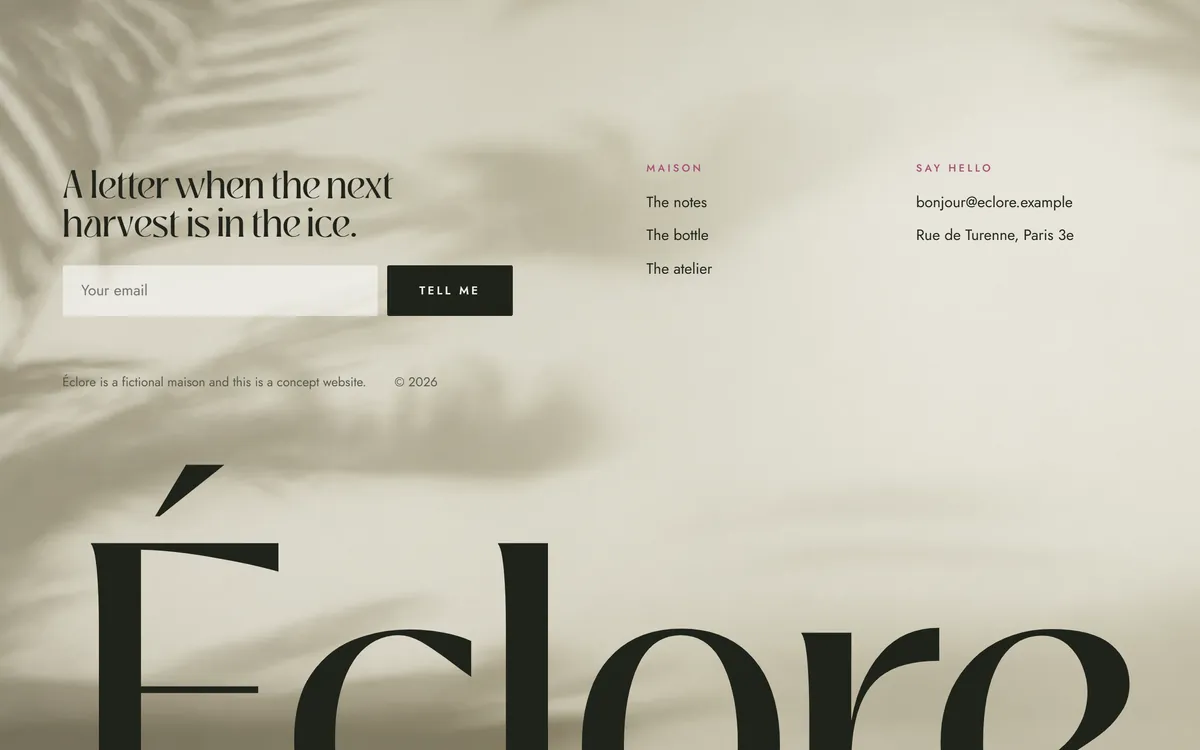
This is why a good sign-up box makes a clear promise. Here are three from concept sites we designed. Each one says what will arrive, and two of them say how often.
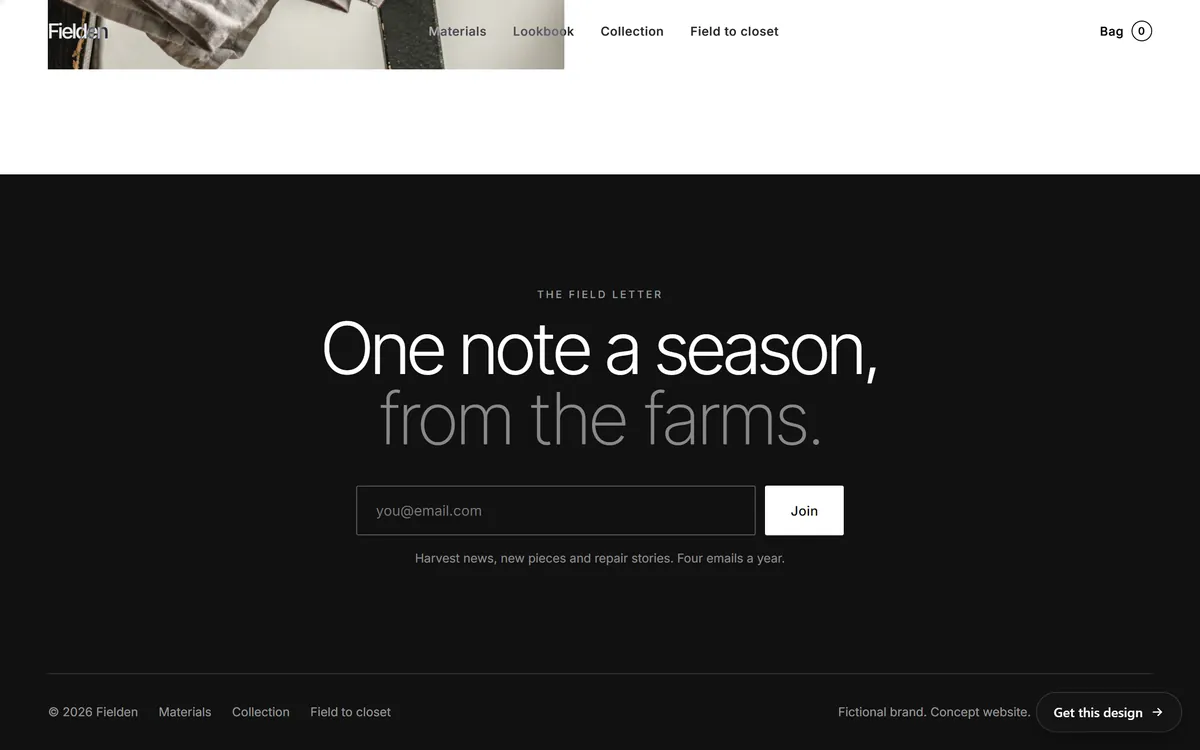
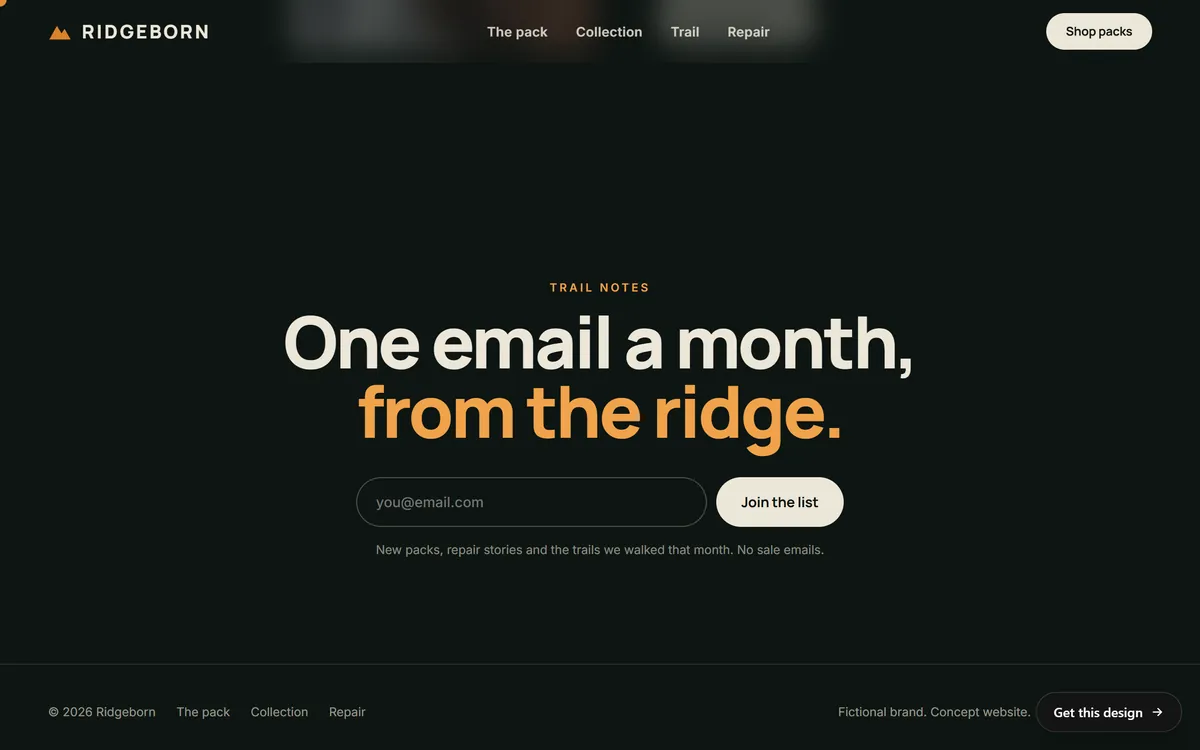
Notice what these boxes have in common. One field, one button and one short line that sets expectations. A promise like that is a reason to join, and it makes it easier to keep readers happy later, because you only send what you said you would send.
What the numbers say, and what they do not
You will read big promises about email: a high return for every dollar spent, better than most other channels. Marketing groups and email companies publish these figures, and they are one reason email has such a good name.
Treat them with care. They come from surveys in which marketers estimate their own return. They differ from one survey to the next, and they often count only the cost of sending, not the hours spent writing and building the list. For that reason we do not quote a figure here. Your results will vary with your business, your list and the quality of what you send.
What you can say safely is simpler. Sending an email costs little, many email services let you start with a free plan, and a list you build is still there next year.
What email can do for a small business
Email is useful for much more than sales messages. These are the jobs it does well:
- Announce something new. A menu, a product, a date or an opening.
- Remind people. It is time for a tune-up, a refill, a check-up or a visit.
- Bring back old customers. A short note to people who have not heard from you in a while.
- Share advice. Useful tips show that you know your trade.
- Confirm bookings. A message right after booking and a reminder before the visit.
- Ask for reviews and referrals. At the moment when a customer is happy.
- Tell your story. Who you are, how you work and what you care about.
Different businesses use these in different mixes. A restaurant might send its seasonal menu. A bicycle maker might send care tips and the date of the next test rides. A solar company might explain how a bill changes over a year. A lodge might tell guests when the darkest nights of the month arrive. The topic changes, and the idea stays the same: be useful to people who already said yes.
Email fits more kinds of business than you think
People often say email is only for online shops. It is not. Here is what it can look like for four kinds of business.
A local service business
A plumber, a dentist or a landscaper can send seasonal reminders: check your heating before winter, book your cleaning, here is what to do before the first frost. Customers remember who sent the reminder when they need help.
A shop
Shops can announce new arrivals, restocks and care tips. A customer who bought a coat last year may be glad to hear how to mend it, or that a new color arrived.
A restaurant or a venue
Menus change, events happen and tables fill up. An email tells your regulars before the public hears, and it gives them a reason to book.
A company that sells bigger projects
Solar, construction and professional services take time to decide. Email lets you stay in front of a customer during the weeks or months in which they compare options, with useful guides, answers to common questions and news of finished projects.
Where social media still helps
None of this means you should leave social media. It is good at things email is not:
- Being found by people who have never heard of you.
- Showing your work in pictures and short videos.
- Quick updates and public conversations.
- Proof that you are active, since many people check a profile before they buy.
The best setup is simple. Use social media to meet people and email to keep in touch. Put the link to your sign-up in your profile and in your posts, and invite followers to join the list, so they never depend on a feed to hear from you.
What email cannot do
Email has limits, and it is better to know them early.
- It cannot work without a list. If you have no subscribers yet, the first job is to ask for addresses.
- It cannot fix a weak offer. A great subject line will not sell something nobody wants.
- It cannot replace your website. The site is where people check that you are real, read the details and take the next step. Your emails send them there.
- It needs regular attention. A list you forget for a year goes cold.
- It cannot please everyone. Some people will unsubscribe. That is normal, and a smaller list of people who care is better than a large list that ignores you.
- It comes with rules. You must follow the law and treat people's addresses with respect. A later lesson in this series covers the rules.
Four myths about email
Myth: email is old, and nobody reads it
People still check email every day to find receipts, appointments and messages from places they like. What is old is the habit of sending boring emails. A message that people expect and find useful still gets read.
Myth: I need thousands of subscribers
You can begin with ten. A list of loyal customers who read what you send can matter more than a big list of strangers. Start with the people who already know you.
Myth: email is the same thing as spam
Spam is email nobody asked for. Email you send to people who agreed to hear from you, with an easy way to leave, is a different thing. Getting that difference right is the whole craft.
Myth: I have to write long messages
Short is fine. One idea, one link and a real signature will do. People read short emails to the end.
A simple way to start
You do not need a big plan. This order works for most small businesses, and the next lessons follow it.
- Decide what people will get when they join, so they have a reason to say yes.
- Put a sign-up box where people already look: your site, your counter and your profiles.
- Send a welcome email as soon as someone joins.
- Send a simple newsletter on a schedule you can keep.
- Set up a few emails that send themselves: bookings, reminders and thank-yous.
- Learn the rules for email in the United States and follow them from your first message.
- Ask happy customers for reviews and referrals, and make it easy for them to come back.
Email and Good Sites Only
Every site we build includes contact forms, so a visitor can write to you from the first day, and the texts of each page are written for your business. Email marketing can be added as a monthly service. Nobody can promise a number of subscribers, opens or sales, and we do not. When you are ready for a site that gives people a place to reach you, you can start your site.
Questions people ask
Is email marketing still worth it in 2026?
For most small businesses, yes. It is one of the few ways to reach customers directly, without a platform in the middle. It works best with a list of people who asked to hear from you and messages that are useful. Results vary by business, so nobody can promise them.
Is email better than social media?
They do different jobs. Social media helps people discover you. Email helps you keep in touch with people who already know you. Most small businesses do best using both: social media to meet people and email to bring them back.
How many subscribers do I need to start?
None. You can send your first email to ten customers. Start with the people who already buy from you, then add a sign-up box so the list grows along with your business.
Do I need a website to do email marketing?
You can start without one, for example by collecting addresses at your counter and sending from an email service. But a website gives people a place to check you out and a place to join your list, so most businesses want both.
How much does email marketing cost?
Many email services have free plans for small lists, and paid plans usually grow with the number of contacts. Plans change often, so read the current plan page before you choose. Your biggest cost is time, because writing something useful takes thought.
How often should I email my customers?
Often enough that people remember you, and not so often that they tire of you. For most small businesses, once or twice a month is a safe start. Say the rhythm on your sign-up box and keep to it.
Can email replace social media?
It can replace part of what you use social media for, such as keeping in touch with customers. It cannot replace discovery. New people still need a way to find you, such as search, social media or word of mouth.
Will people really read my emails?
Some will and some will skip, and that is normal. People open emails from businesses they know and that have been useful before. Use a clear subject line, keep messages short and send something worth reading. A later lesson explains why open rates are less reliable than they look.
Is a newsletter the same as email marketing?
A newsletter is one kind of email marketing: a regular message to your list. Email marketing also includes welcome emails, reminders, offers and other messages that send themselves.
What if I have no customers yet?
Tell people about your business wherever you can: your website, your profiles, local events and the people you know. Give them a reason to join, such as news about your opening, and ask for their address. An early list can be small and still useful.
Want a website that does all of this? Start your site