Retargeting in plain words
Retargeting shows ads to people who already visited your site. It can help, and it needs care, because it works by tracking.
Retargeting, also called remarketing, shows your ads to people who have already visited your website. It can work well because those people already know you. It also involves tracking, so it needs care. This lesson explains how retargeting works, when it makes sense for a small business and what to do about privacy.
Retargeting shows ads to people who already know you
Someone visits your website, looks at a product or a service and leaves without buying or contacting you. That is normal. Most visitors do not act on a first visit. Later, while that person browses other sites or scrolls Facebook and Instagram, they see an ad from your business that reminds them. That is retargeting.
Google and Meta both offer it. Google tends to call it remarketing, and the idea is the same. It can help because the audience is not made of strangers. These are people who already showed interest. It is not a guarantee of anything, and it is not right for every business, but it is worth understanding before you decide.
How it works behind the scenes
Retargeting depends on a small piece of code that the ad platform gives you. It is often called a tag or a pixel. Meta calls its version the Meta Pixel, and Google uses a tag of its own. Here is the usual path.
- The ad platform gives you the tag.
- The tag is placed on your website.
- When someone visits, the tag tells the platform that a browser opened a certain page, and sometimes that it took an action, such as starting a booking.
- The platform adds that browser to an audience, which is a list, such as "people who viewed this product."
- You create an ad aimed at that audience.
- The platform shows the ad to people on that list while they use its apps or partner sites.
In general, you do not get a list of names. You see how large an audience is and how your ads perform with it.
The tag comes from the ad platform, and the person who manages your website has to place it. That is a separate task from designing the site. Adding it is a decision for the owner, which brings us to privacy, further down.
What a visitor who leaves looks like
Here are three places on concept websites we designed where a visitor might stop and leave. Each one is the kind of moment that a retargeting list could be built around, if the owner chose to use one.

A perfume page where a visitor can choose a size and see a price. Someone who looks at this and leaves without adding it to the bag is a likely candidate for a reminder.
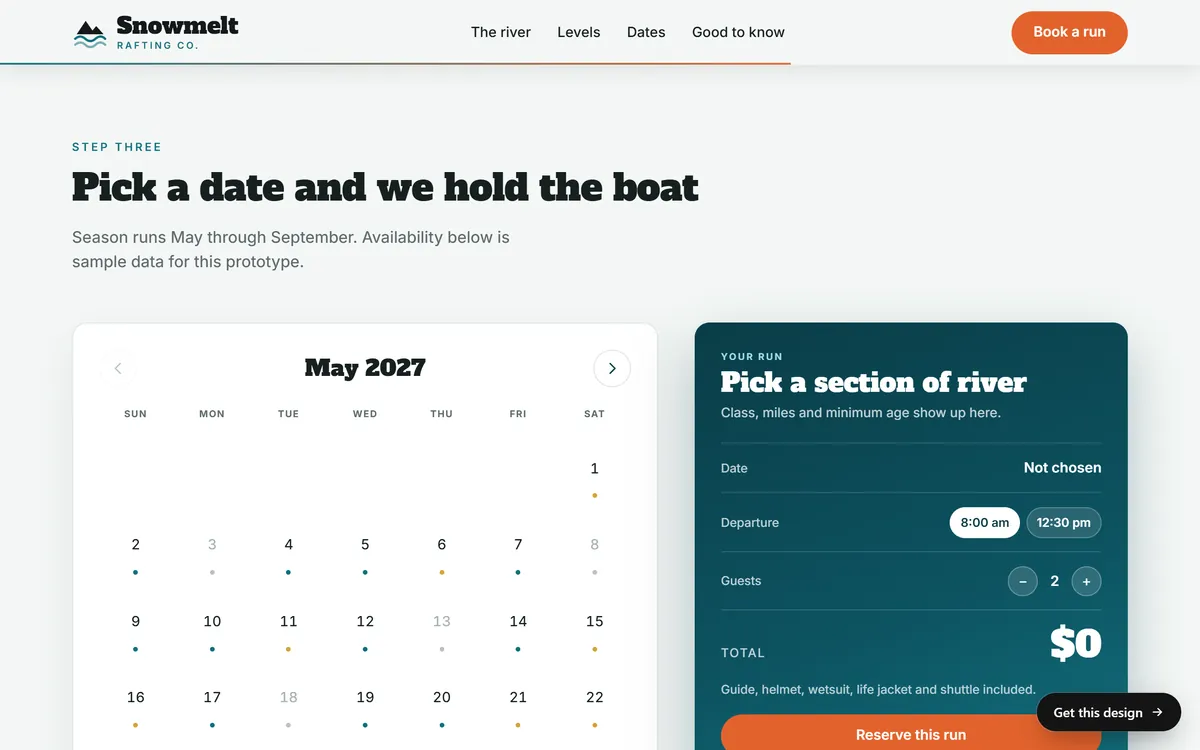
A booking calendar on a rafting company's site. A visitor who opens it and leaves without picking a date has shown real interest.
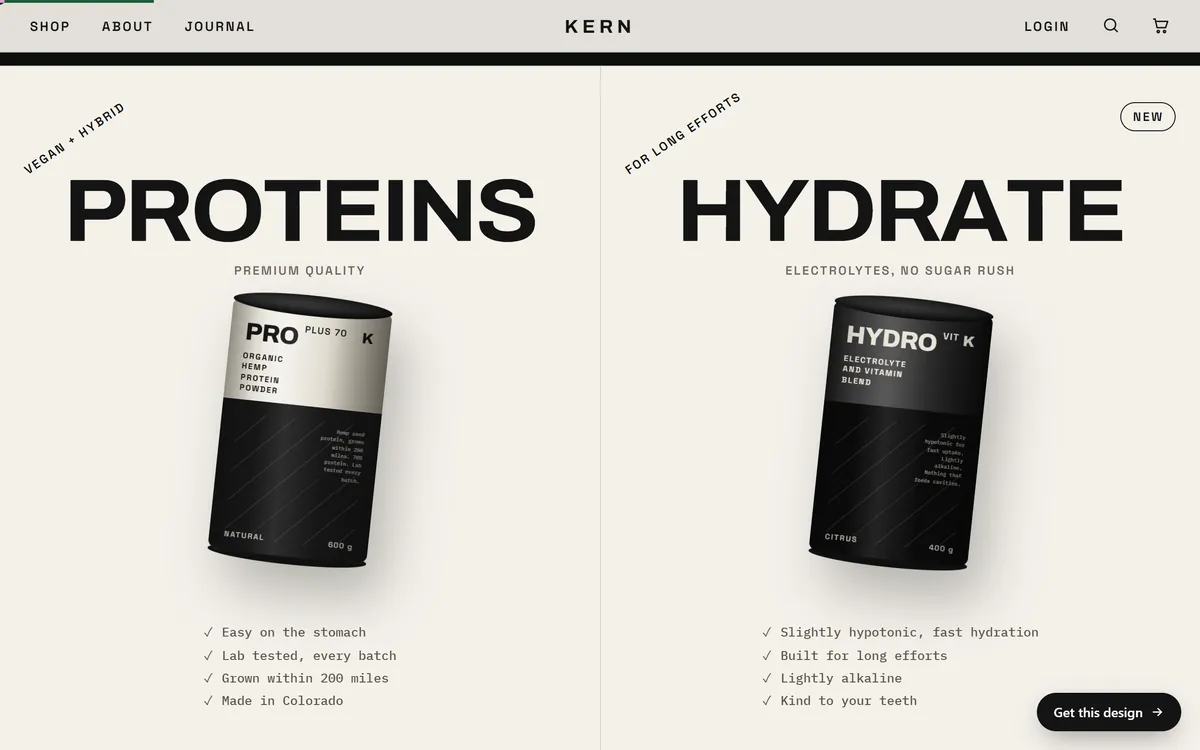
A page that compares two product lines. A visitor who spends time here is comparing, and may come back after they decide.
An example in plain words
Imagine a rafting company whose booking calendar gets many visitors, but only some of them reserve a date. The owner decides to try retargeting. First, the owner asks the person who manages the site to place the tag. Next, the privacy policy is updated to explain it, and a consent notice is added where the law requires one. Then the owner builds an audience of people who opened the booking calendar in the last few weeks and leaves out the people who already booked.
The ad that audience sees is not a copy of the first one. It shows a real photo from the river, answers a common question, such as what comes with every seat, and offers one button that opens the calendar. After a few weeks, the owner compares what retargeting cost with the bookings it brought and decides whether to keep going. Every step is a choice, and none of it happens by itself.
When retargeting makes sense
- The purchase takes time. High-priced items, quotes, bookings and trips often need a second or third visit.
- You have an online store. People who add something to a cart and leave are a classic case.
- You have a deadline or an event. A reminder close to a date can help.
- You have steady traffic. Audiences need enough people to work with.
- Your site has a clear next step. A reminder is only useful if the page it points to makes the next move easy.
- You have something new to say. An answer, a proof or a simple offer gives people a reason to come back.
When to wait
- Your traffic is very small. Platforms need a minimum audience size before they will show ads to a list, and the size varies by platform. A tiny list may never run.
- Your first campaign is not working yet. Fix the page and the offer before you chase the visitors who left.
- You cannot count results yet. Without tracking of results, retargeting is hard to judge.
- You are not ready to explain tracking. If you are not ready to tell visitors what you collect, wait.
- Your business deals with sensitive topics. Platforms have stricter rules for areas such as health or money, so read them first.
Other kinds of audiences
Platforms also let you build audiences from other things, such as people who watched one of your videos, people who interacted with your page or a customer list you upload. Which options exist, and what rules apply to each, changes over time, so read the platform's current help pages before you rely on one. If you use a customer list, use only contacts you have the right to use.
What a retargeting ad should say
People who already visited should not see the same ad again and again. Give them something new.
- Answer the question that stopped them. It might be how it works, what is included or how fast you reply.
- Show proof. A real review or a real photo of your work helps.
- Remind them of the next step. One button, the same one as on your page.
- Do not nag. Watch how often one person sees your ad. Seeing it too often feels like being followed.
- Leave out people who already acted. Platforms let you exclude people who bought or booked, so you do not pay to remind them of something they did.
What retargeting costs
You pay for the ads the way you pay for any campaign, with a budget you choose. Audiences of past visitors are small, so a small budget can be enough to reach them. The extra costs sit outside the ad account: the work of placing the tag, updating your privacy text and, where the law requires it, adding a consent notice to your site. Add those to your plan before you decide.
Privacy: what to do before you start
Retargeting works by tracking what visitors do. That is why it deserves care, and why it should only be added when the owner wants it. Here is a short list of what to think about.
- Add the tag only when you have decided to use retargeting. Do not add it just because someone offered it.
- Explain it in your privacy policy. Say what you collect, that ad platforms receive it and how people can opt out.
- Ask for consent where the law requires it. Rules differ by state and by country, and some places require you to ask visitors before tracking starts.
- Follow each platform's own rules. Google and Meta both have rules for advertisers, and they are stricter for sensitive topics.
- Ask a professional. Privacy questions go to a lawyer or a privacy specialist, who can tell you what applies to your business and your visitors. This lesson is not legal advice.
Keep in mind that people can limit tracking in their browsers, on their phones and in their ad settings. Your audiences may therefore be smaller than your visitor numbers. That is a normal result of people's choices.
Retargeting mistakes to avoid
- Adding a tag without telling visitors or asking for consent where it is required.
- Showing the same ad to the same people for months.
- Leaving people who already bought in the audience.
- Starting before the first campaign and the page are working.
- Using it in a sensitive area without reading the platform's rules.
- Assuming the audience is as big as your visitor count.
Ways to stay in touch without tracking
Retargeting is not the only way to bring people back. These work because people chose to be there.
- An email list that visitors join with permission.
- A follow on Instagram or Facebook.
- Updates on your Google Business Profile.
- A reminder after a booking or a purchase.
These options are slower than ads, but they build a relationship that you own. A customer who joined your email list has chosen to hear from you, which is very different from being followed around the web by an ad.
A simple way to decide
Answer these four questions. If any answer is no, wait.
- Do enough people visit my site to build a useful audience?
- Does my site give them a clear next step and a reason to come back?
- Can I count the results?
- Am I ready to explain tracking in my privacy policy and ask for consent where required?
Retargeting and your website
Retargeting only works if your website has something worth coming back to. Every site we build includes design for your industry, texts written for your business, a mobile version and contact forms, so a visitor who returns finds clear pages and an easy way to reach you. The privacy side, such as the policy and consent, is a matter for a professional, and you should settle it before you add any tracking tag. When you are ready to build the site your ads will point to, you can start your site.
Questions people ask
What is retargeting in simple terms?
It is showing ads to people who already visited your website. If someone looks at a product and leaves, they may later see an ad from you on another site or in a social feed, as a reminder.
What is the difference between retargeting and remarketing?
Very little. Google uses the word remarketing, and many marketers say retargeting. Both mean showing ads to people who already visited or interacted with your business.
How does retargeting work?
A tag from the ad platform is placed on your website. It tells the platform when a browser visits a page. The platform adds that browser to an audience, and you can aim ads at it.
Is retargeting worth it for a small business?
It can be when people take time to decide, you have steady traffic and your site has a clear next step. It is not worth it if your traffic is tiny, if your first campaign is not working yet or if you cannot count results.
Do I need a pixel or a tag for retargeting?
Yes. Retargeting based on website visits needs a tag from the ad platform, such as the Meta Pixel for Meta. Add it only when you have decided to use retargeting.
Is retargeting legal, and do I need consent?
It depends on where your visitors are and what the law there requires. In general, you should explain tracking in your privacy policy and ask for consent where the law requires it. Ask a lawyer or a privacy specialist what applies to you.
How long should I retarget someone?
Choose a window that matches how long your customers take to decide. A quick purchase needs a short window. A big decision, such as a major purchase, may need a longer one. The platforms let you set how long a visitor stays on a list.
Can I stop showing ads to people who already bought?
Yes. Platforms let you exclude an audience, such as people who completed a purchase or a booking. That saves money and avoids annoying your customers.
Why do ads follow me around the internet?
Usually because you visited a site that uses a tag, and the platform added you to an audience. You can change your ad settings in the platforms and in your browser or phone to limit personalized ads.
How many visitors do I need for retargeting?
Platforms set minimum audience sizes, and the numbers vary and change. Check the current rules in the platform's help pages. If your site has very little traffic, other ways of staying in touch may serve you better for now.
Want a website that does all of this? Start your site