Google Ads or Meta Ads: which one fits your business
Two platforms, two different jobs. Learn how each one works, where it falls short and how to pick your first.
Google Ads reaches people who are searching. Meta Ads reaches people who are scrolling on Facebook and Instagram. Both can work for a small business, but they fit different businesses and different goals. This lesson shows how each one works, gives you six questions to choose between them and explains why most beginners should start with only one.
The main difference is asking versus browsing
People type into Google when they want something done. They search "emergency plumber," "solar panels in Denver" or "vegan restaurant open now" because they have a need, and they want an answer in the next few minutes. A search is a question, and an ad on that page is part of the answer.
People open Facebook and Instagram for a different reason. They want to see what friends are doing, watch something funny or pass the time. They are not asking for anything. An ad there has to catch their eye first and make them curious second.
The shortest way to remember it is this: Google meets demand that already exists, and Meta can create interest in people who did not know they wanted you. Neither is better. They are two different jobs.
How Google Ads works
Google Ads lets you show ads on Google Search, on YouTube and on websites that carry Google ads. For a first campaign, Search is the usual starting point. You choose keywords, which are the words people type, and you write a text ad. Your ad can appear when someone searches for those words, and you usually pay when someone clicks.
What Google Ads does well
- It reaches people who are looking right now, so a click often comes from someone ready to act.
- Search ads are text, so you can start without photos or video.
- It suits services and local needs, such as repairs, clinics, installers and restaurants.
- Results are easy to connect to a call, a form or a booking.
Where Google Ads can fall short
- If very few people search for what you sell, there are few chances to show your ad.
- In busy fields, such as law, home services and insurance, clicks can be expensive.
- The setup has many settings, and a wrong choice can waste money.
- You need a page that matches each search, which means some planning.
How Meta Ads works
Meta Ads is the system behind ads on Facebook and Instagram, and on other Meta apps. You make them in a tool called Ads Manager. You choose an objective, which can be awareness, traffic, engagement, leads, app promotion or sales. Then you choose an audience, a budget and the picture or video. Meta decides who sees the ad inside the limits you set.
What Meta Ads does well
- It reaches people before they start searching, so it can introduce a new business or product.
- It shines with things that look good, such as food, clothing, travel, gear, events and places.
- You can show an offer to people who live near you.
- Some campaign types are built around getting contact details or starting a conversation.
Where Meta Ads can fall short
- People did not ask for your ad, so fewer of them act right away.
- You need strong photos or short videos, and they have to be good in a small, fast feed.
- Audience options change, and ads about housing, jobs or financial products have extra limits.
- It often needs more testing before you find what works.
Six questions that point the way
Answer these honestly, and the pattern will show you where to begin.
- Do people already search for what you sell? Type your service and your city into Google and look at the suggestions that appear as you type. If you see suggestions and ads, there is demand to meet. If you see almost nothing, search ads will have little to work with.
- How urgent is the need? A burst pipe cannot wait, and a person with that problem will search. A weekend trip can wait, and a person planning it may be inspired by a photo. The more urgent the need, the more Google fits.
- Is your product easy to show? If a good photo or a short video makes someone say "I want that," Meta can carry it. If your service is hard to see, search is easier.
- Do people know they need you? If your offer is new or unusual, nobody is searching for it yet. Meta can introduce it.
- What action do you want? A phone call or a quote request fits search. A visit to a class, a follow or a purchase of something people love to look at fits Meta. Many online stores use both.
- What do you have ready? If you have good photos, Meta is open to you. If you have a clear page for each service, Google is open to you. Use what you already have.
What this looks like on real websites
Here are three concept websites we designed, and the kind of ad each one would suit. These are examples to help you think. We are not saying these businesses run ads.
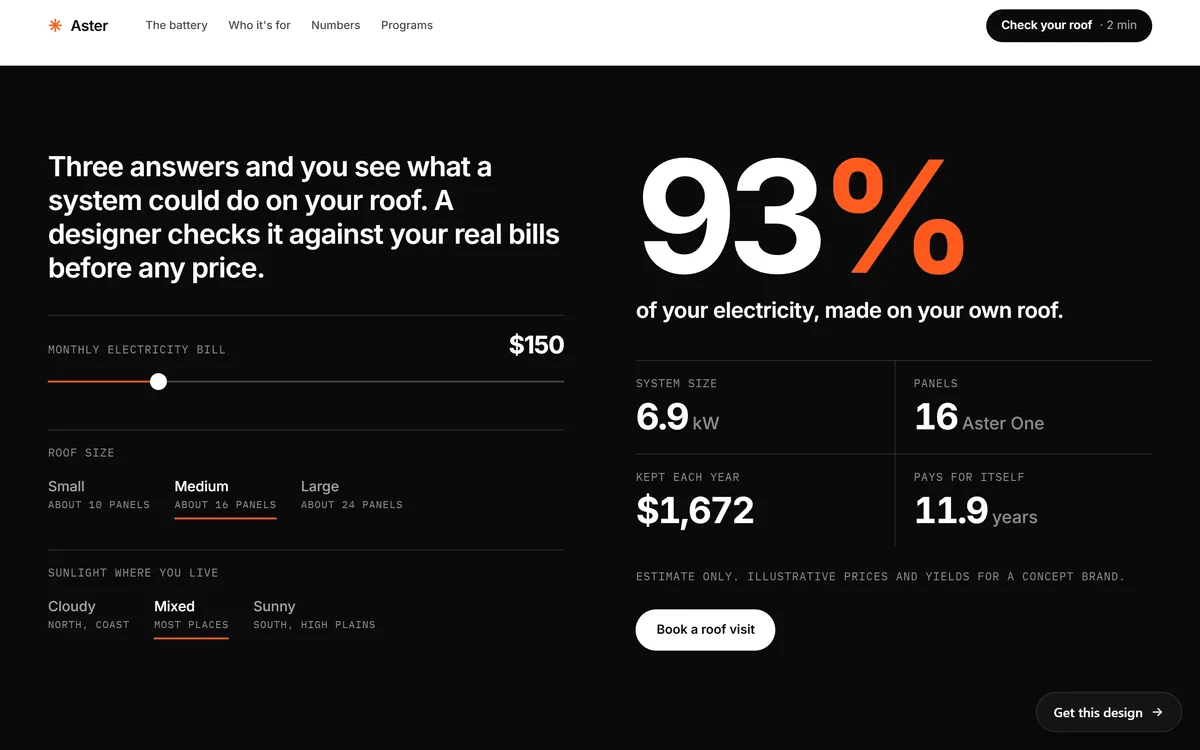
First, a solar company. Someone who searches for solar panels in their city wants to know what a system could do for their bill. This page answers with a calculator and a button to book a roof visit, which is a good match for a person who arrived from a search.
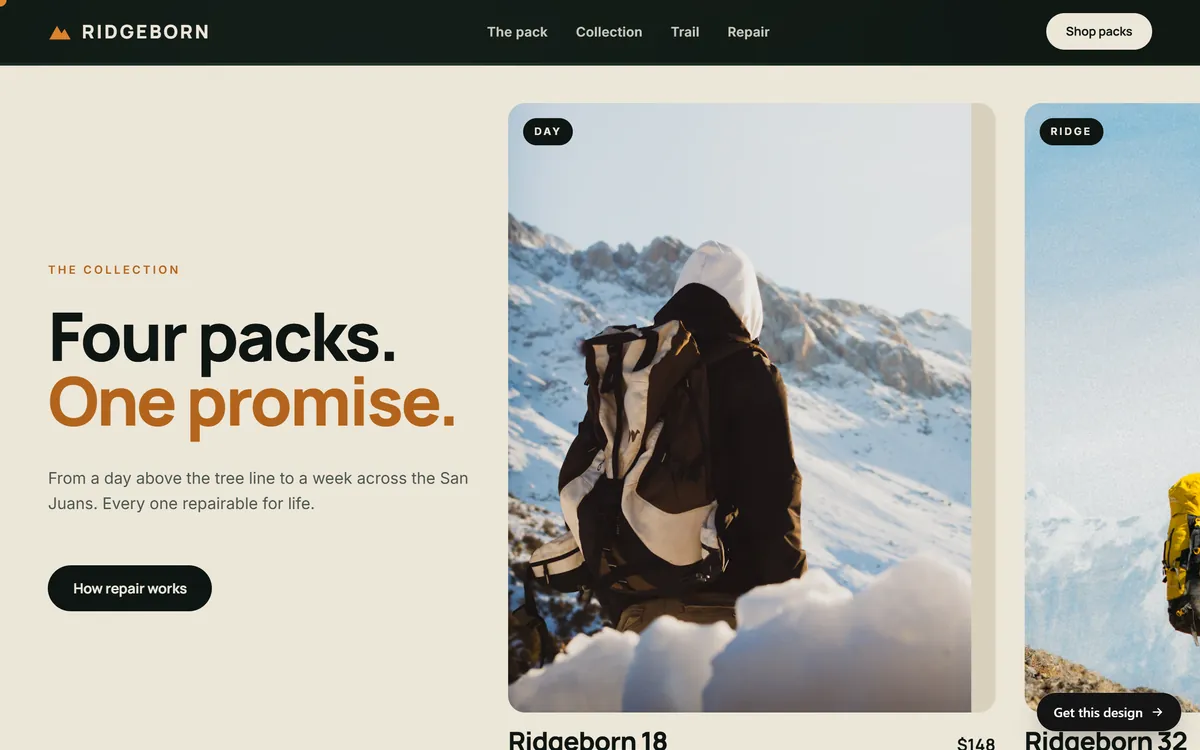
Second, an outdoor gear maker. A backpack is easy to show, and a photo of a person wearing one in the snow can stop someone who was only scrolling. A page like this one would fit a Facebook or Instagram ad.
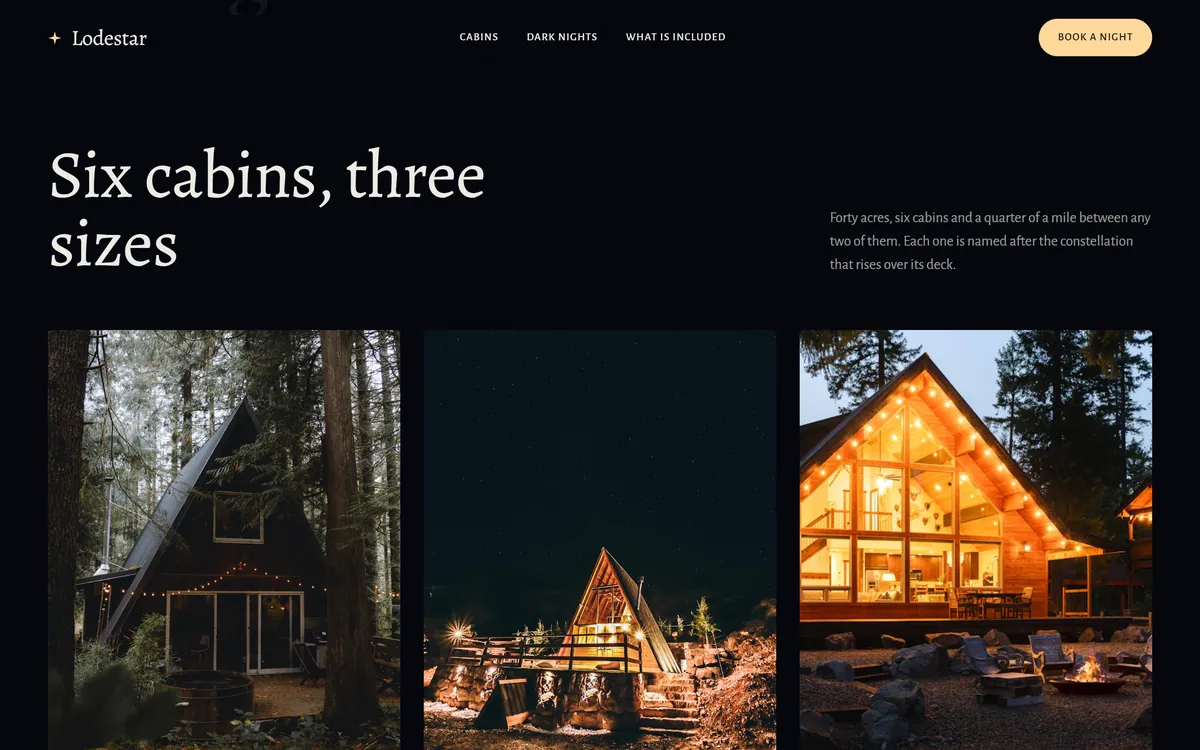
Third, a dark sky lodge. A lodge can work both ways. A person might search for cabins near a place, or fall for the idea after seeing a photo of a cabin under the stars.
Two small businesses, two answers
Take an imaginary plumbing company. Its customers have a leak and need someone today. Almost all of them start with a search, so Google Ads is the natural first choice. The company needs a page for each service, a phone number that is easy to tap and someone to answer the call.
Now take an imaginary candle maker who sells online. Nobody wakes up needing a hand-poured candle, so nobody searches for one in a rush. The product looks lovely in photos and videos, though, so Facebook and Instagram can introduce it to people who might fall for it. The candle maker needs good pictures, an easy checkout and a way to bring buyers back.
Same budget, same effort, different starting line. The question is always where your customers will first meet you.
Cost per click is not the whole story
Clicks on Meta often cost less than clicks on Google Search. That sounds like a bargain, but a person who clicked while scrolling is less likely to call than a person who searched for a plumber. If you compare only the cost per click, you will choose wrong. Compare the cost of a lead or of a customer instead. The next lesson shows how to do that math and which named sources publish cost benchmarks.
Start with one platform
A small budget split across two platforms teaches you very little about either. Start with the platform where your customers are most likely to meet you. Run it for a few weeks, learn what words and pictures work, and then add the second one using what you learned.
If you are not sure, use these quick checks:
- Ask your last ten customers how they found you. Their answers are better than any guess.
- Search your own service and city on Google and see which ads appear. If competitors are paying for those searches, people are searching.
- Look at what similar businesses post on Instagram and Facebook. Meta also keeps a public library of ads that are running, which you can browse.
- Look at the photos you have. Strong photos tilt you toward Meta.
Other places to know about
Google and Meta are not the only options. Microsoft Advertising, TikTok, LinkedIn, Pinterest and Nextdoor sell ads too, and Google has other ad products made for some local service businesses. Which ones you can use depends on your type of business and your area, and the platforms change these options often, so read their current help pages before you decide. For a first campaign, one of the two platforms in this lesson is a simpler place to learn.
Language matters on both platforms
If your customers speak Spanish, or both English and Spanish, plan for it from the start. Both platforms let you choose the language of the people you want to reach, and each ad should be written in the language of the person who sees it. A Spanish ad that sends people to an English-only page loses many of them at the click. Write your Spanish version on its own, with the words your customers really use, instead of translating the English line by line.
Both platforms need a good page
Whichever you choose, the click ends on your website. A page that loads fast on a phone, says what you do in the first line and offers one clear next step helps both kinds of ads. Every site we build includes design for your industry, texts written for your business, a mobile version and contact forms. If you are ready to build the page your ads will point to, you can start your site.
Questions people ask
Is Google Ads or Facebook Ads better for a small business?
Neither is better in every case. Google Ads is a strong fit when people already search for what you sell, such as repairs or local services. Facebook and Instagram ads fit visual products and businesses that need to be introduced. Look at how your customers find you today to decide.
What is the difference between Google Ads and Meta Ads?
Google Ads shows your message to people who are searching, on Google Search and on other Google places such as YouTube and partner websites. Meta Ads shows it to people on Facebook, Instagram and other Meta apps while they browse. Search ads meet people with a need. Social ads catch people who were not looking.
Should I use both Google and Facebook ads?
Eventually, many businesses do. For a beginner with a small budget, start with one, learn from it and add the second later. Splitting a small budget across two platforms leaves each one with too little data to learn from.
Which is cheaper, Google Ads or Facebook Ads?
A click on Meta often costs less than a click on Google Search, but the people clicking are in different moods. Judge by the cost of a lead or a customer, not the cost of a click. Costs also vary by industry and place.
Do Facebook ads work for local businesses?
They can. You can choose an area, such as a city or a radius, and show your ads to people who live there. They work best when your business has something people like to look at, such as food, events, products or places.
Are Instagram ads part of Facebook ads?
You create both in the same tool, Meta Ads Manager. When you set up a campaign, you can choose to show your ads on Facebook, on Instagram or on both. Meta can also choose the places for you, with an option it calls Advantage+ placements.
Do I need a Facebook Page to advertise on Instagram?
Not always. According to Meta, Instagram ads can run under a Facebook Page or under a connected Instagram professional account. The screens change, so check the current setup steps in Ads Manager.
Is Google Ads good for beginners?
It can be, if you start with a simple Search campaign, a small budget and a clear goal. The settings can feel like a lot at first. The lesson on your first Google Ads campaign walks through them one by one.
Can I run ads in Spanish?
Yes. Choose the language of your audience, write the ad in that language and send people to a page in the same language. Both platforms let you set the language you want to reach.
How do I know if people search for my service?
Type your service and your city into Google and watch the suggestions. Check the "People also ask" box and the related searches at the bottom. You can also use Google's free Keyword Planner, which lives inside a Google Ads account, to see how often words are searched.
Want a website that does all of this? Start your site