A marketing budget for a small business
A budget turns marketing from guesswork into a plan. Start from what a customer is worth and work back to what you can spend.
A marketing budget is a plan for the money and the time you will spend to win customers. This lesson shows you how to build one from your own numbers, where small businesses usually spend, how to split the budget and how to know whether the money is working. You do not need an accountant, only a pencil and your records from the last few lessons.
What a marketing budget is
A marketing budget lists everything you spend, in money and in time, to bring in customers. Write it down, even if the amounts are small, because a cost you have not written down is a cost you cannot judge.
Most small business budgets include some of these lines.
- The website. Domain, hosting, maintenance and any changes you pay for.
- Email. The platform you use to send messages to your list.
- Local presence. Your Google Business Profile, directories and the time you spend on reviews.
- Content. Photos, writing and anything you pay someone to make.
- Paid advertising. Search ads, social ads and local sponsorships.
- Print and events. Flyers, signs, trade shows and community events.
- Tools. Design, scheduling and anything else you subscribe to for marketing.
- Your own time. The hours you spend, valued at what they are worth.
Rules of thumb versus your own numbers
You will find guides that tell you to spend a fixed share of your revenue on marketing. This lesson does not give you a percentage, because the right share depends on your industry, your margins, whether you are new or established and how fast you want to grow. Treat any rule of thumb as a conversation starter. A budget built from your own numbers is more reliable, and you already have most of them.
Build the budget in five steps
Step 1: know what a customer is worth
Work out how much profit a new customer brings. Start with the average sale, add how many times a customer buys over time and subtract your costs. If you do not know the exact figure, use a careful estimate. This number decides how much you can afford to spend to win one customer.
Step 2: set a goal
Decide how many new customers you want per month or per year. Be specific, and make it realistic for your capacity. A goal you cannot serve is not a goal.
Step 3: work backwards
Turn the goal into leads, and the leads into visitors. Divide the new customers you want by the share of leads that become customers, which tells you how many leads you need. Divide the leads by your conversion rate from lesson 10-3 to find the visitors you need.
Step 4: estimate the cost of each channel
Free channels cost time: your Google Business Profile, reviews, referrals, your email list and useful content. Paid channels cost money, and the only way to know their real cost is to test them. As a starting point, the LocaliQ report for 2026 puts the average cost per lead for search advertising at $66.69 across industries and the average conversion rate from ad click to lead at 8.18 percent. Those averages hide wide differences between industries and places, so use them only until you have your own numbers.
Step 5: add the fixed costs and set a ceiling
Add what you pay every month no matter what, such as hosting and tools, to what you expect to spend on leads. Then compare the total with what the business can afford without strain. If the plan costs more than you can afford, change the goal, the channels or the timeline. Do not stretch the budget and hope.

A worked example
These numbers are invented, except for the cost per lead, which is the LocaliQ average mentioned above. Say you want 6 new customers a month. If 1 in 3 leads becomes a customer, you need 18 leads. If every one of those leads came from paid search at the average cost per lead of $66.69, that would cost about $1,200 a month. Say each new customer brings $400 in profit. In this example, the $2,400 of profit from six customers is larger than the $1,200 cost.
Now change one assumption. If half of your leads came from referrals, your Google Business Profile and your email list, which cost time rather than money, the paid part would be about half as large. And if your close rate were 1 in 4, you would need 24 leads and the cost would rise. The example shows why the first numbers matter so much: small changes in the close rate and in the cost per lead move the whole budget.
Where small businesses can spend
The foundation
Your website, domain, hosting, email address and the pages that explain your business. Everything else sends people here, so a weak foundation wastes the money you spend on top of it.
Local presence
Your Google Business Profile, reviews and directory listings. These cost mostly time, and they are often the first place a local customer sees you.
An audience you own
An email list and useful content. You build them over time, and nobody can switch them off.

Paid channels
Search ads reach people who are looking for what you sell right now. Social ads reach people who have not yet thought about you. Local sponsorships and print reach your neighborhood. Start with one channel, and learn it before you add another. The series on ads explains how.
Relationships
Referrals, partnerships with nearby businesses and community events. They cost time and sometimes a small amount of money.
How to split the budget
You do not need a perfect formula. Use an order of priority instead.
- Protect the foundation first. Hosting, domain and maintenance are not optional.
- Keep the always-on channels running. Your Google Business Profile, reviews and email list.
- Add paid channels when you know your numbers. A paid channel on top of a page that does not convert loses money faster.
- Keep a small amount for experiments. Give each test a fixed budget and an end date.
Pick two or three channels and give each enough money and time to produce a result you can read. Spreading a small budget across ten channels teaches you nothing about any of them. If your business has a busy season, plan to spend more in the weeks before it, and remember your cash flow, so you do not pay for advertising in the month you are least able to.
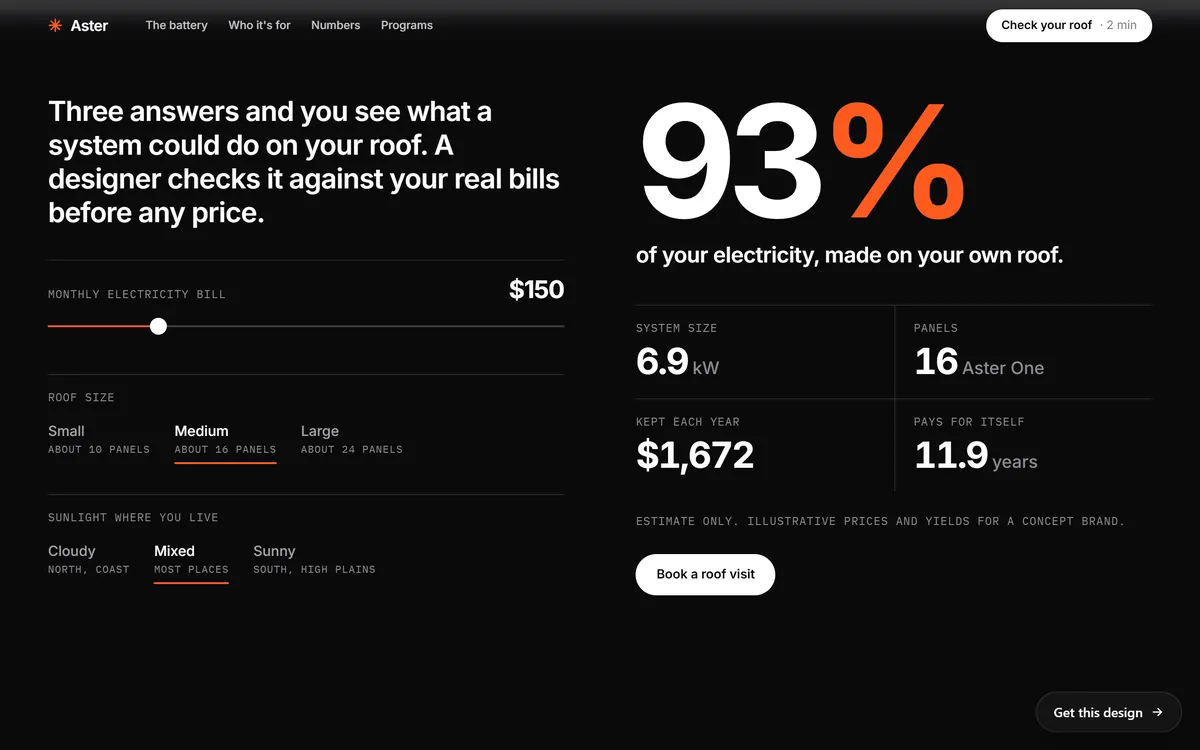
Tools that ask a visitor a few questions and show a result, like the estimator above, are one way to turn paid visits into leads. They are also something you pay for in time to build and maintain, so count them in the budget too.
Your time is part of the budget
If you spend two hours a month on the routine in lesson 10-8, that time has a value. Think about what an hour of your time is worth in your business. If you could earn more by serving customers than by writing a post, buying help for the post can be the sensible choice. If money is tight, your time is the resource you can add.
Track what the money does
For each line of the budget, write down four numbers every month.
- Spend. What you paid, in money and in hours.
- Leads. How many inquiries came from it.
- Customers. How many of them paid.
- Revenue or profit. What those customers brought in.
From these you can calculate the cost per lead, which is the spend divided by the leads, and the cost per customer, which is the spend divided by the customers. Compare the cost per customer with the profit a customer brings. A channel is worth keeping while a customer brings in more than it costs to win one. Use the source question from lesson 10-2, "How did you find us?", so that each customer is credited to the right line.
Review the numbers in your monthly session. Every quarter, decide for each line whether to keep it, raise it, lower it or stop it.
When the budget is very small
A small budget is not a reason to skip the plan. It is a reason to be selective. Spend first on the foundation, then put your time into the channels that cost nothing but effort: your Google Business Profile, reviews, referrals and your email list. Add one small paid test only when the page that receives the visitors is ready, and cap it at an amount you can lose without worry. Write down the result, then decide whether to repeat it.
Six questions before you spend on any channel
- Who will see this, and are they likely to buy from me?
- What action do I want them to take?
- Where will they land, and is that page ready?
- How will I know it worked? Name the number before you start.
- What is the most I will spend before I stop and look?
- Who will follow up on the leads, and how fast?
Mistakes to avoid
- Buying ads before the site converts. Fix the page first.
- Judging too early. Give each channel enough time and money to show a trend.
- Spreading too thin. Two or three channels done well beat ten done badly.
- Not tracking. Without sources and costs, you are guessing.
- Paying for vanity. Followers and views are not customers.
- Forgetting yearly costs. Domains, hosting and renewals arrive once a year and hurt if they are a surprise.
- Cutting everything in a quiet month. The foundation and the always-on channels keep working for you.
- Copying a competitor's budget. Their margins, goals and customers are not yours.
A one-page budget you can copy
- Monthly, fixed. Hosting, email platform, maintenance, tools.
- Monthly, variable. Advertising, content, sponsorships.
- Yearly. Domain, renewals, photography, a larger update.
- One time. A new page, a campaign, a set of signs.
- Time. The hours you or your team spend, with their value.
Write the amounts in a spreadsheet, add a column for results and review it at the end of every quarter.
Budget lines for a site with us
A website is the base that every other marketing line points to. Hosting, a design made for your industry, texts written for you, a mobile version, SEO setup and contact forms are included in every site we build. If you want ongoing help, these monthly services can be added: Care maintenance, Google Business management, email marketing, a 24/7 chat assistant, review requests and a landing page of the month. If you choose any of them, list each one as a monthly line in your budget. When you are ready to plan your site, you can start your site.
Questions people ask
How much should a small business spend on marketing?
There is no single right number. Build it from your own figures: what a customer is worth, how many customers you want, how many leads that takes and what each channel costs. Then check that the total is something the business can afford.
What percentage of revenue should I spend on marketing?
Many guides suggest a share of revenue, but the right share depends on your industry, your margins and your stage. Treat any percentage as a starting point to question, and rely on a budget built from your own numbers.
What is a marketing budget?
It is a written plan of the money and time you will spend to win customers, divided into lines such as the website, email, local presence, content and advertising.
What should be in a small business marketing budget?
The website and its yearly costs, email, your local presence, content, any paid advertising, tools, events or print and the value of your own time.
How do I split my marketing budget?
Protect the foundation first, keep the always-on channels running, add paid channels when you know your numbers and keep a small amount for experiments with a fixed end date.
What is the average cost per lead?
LocaliQ's 2026 report puts the average cost per lead for search advertising at $66.69 across industries. It varies a lot by industry and place, so use it only as a first estimate.
What is a good return on marketing spend?
There is no universal answer. A channel is worth keeping while a customer it brings in is worth more in profit than it costs to win. Compare your cost per customer with your profit per customer.
Is it better to spend on ads or on my website?
They work together. Ads send people to your site, and a weak site wastes the ad money. Fix the foundation first, then add ads when you know your numbers.
How can I market my business with no budget?
Use the channels that cost time instead of money: your Google Business Profile, requests for reviews, referrals, an email list, useful content and partnerships with nearby businesses.
How often should I review my marketing budget?
Look at the numbers every month in your routine, decide on each line every quarter and rebuild the plan once a year.
Want a website that does all of this? Start your site