How to start a marketing and web design agency for schools
What schools buy, who decides, what to offer them, how to reach them and how to deliver without a design team.
A marketing and web design agency for schools sells one result: more families who visit and enroll. You can start one without a design team, because what it asks of you is knowing how schools decide. This guide covers what schools buy, who decides, what to offer, how to reach them and how to deliver.
Why schools are a good industry for a new agency
Choosing one industry makes everything easier: your name, your examples, your calls and your referrals. Schools have some advantages over other industries:
- A clear measure. A school can count enrollments, tours and applications, so you can talk about results it already tracks.
- A long decision. Families compare schools for weeks before they visit. The website is part of that comparison, and it is often the first thing they see.
- Work that repeats every year. New enrollment, open days, a calendar, news for families. That fits monthly services as well as a website.
- Similar needs from one school to the next. What you learn with the first school helps you with the second.
- Heads who know one another. A school that is happy with you can recommend you to other schools.
Which schools to start with
Start with private schools, academies, daycares and courses. They decide for themselves, and their income depends directly on enrollment. Choose one type if you can: an agency for preschools or for language academies is easier to recommend than one for all of education.
Public schools usually buy through formal purchasing rules that take time and paperwork. Leave them for later, once you have examples to show.
What schools buy
A school rarely asks for "marketing". It asks for the things it can already see are missing:
- A website that explains the school and works on the phones parents use.
- Enrollment online, with the steps and the dates, and tuition payment if the school wants it.
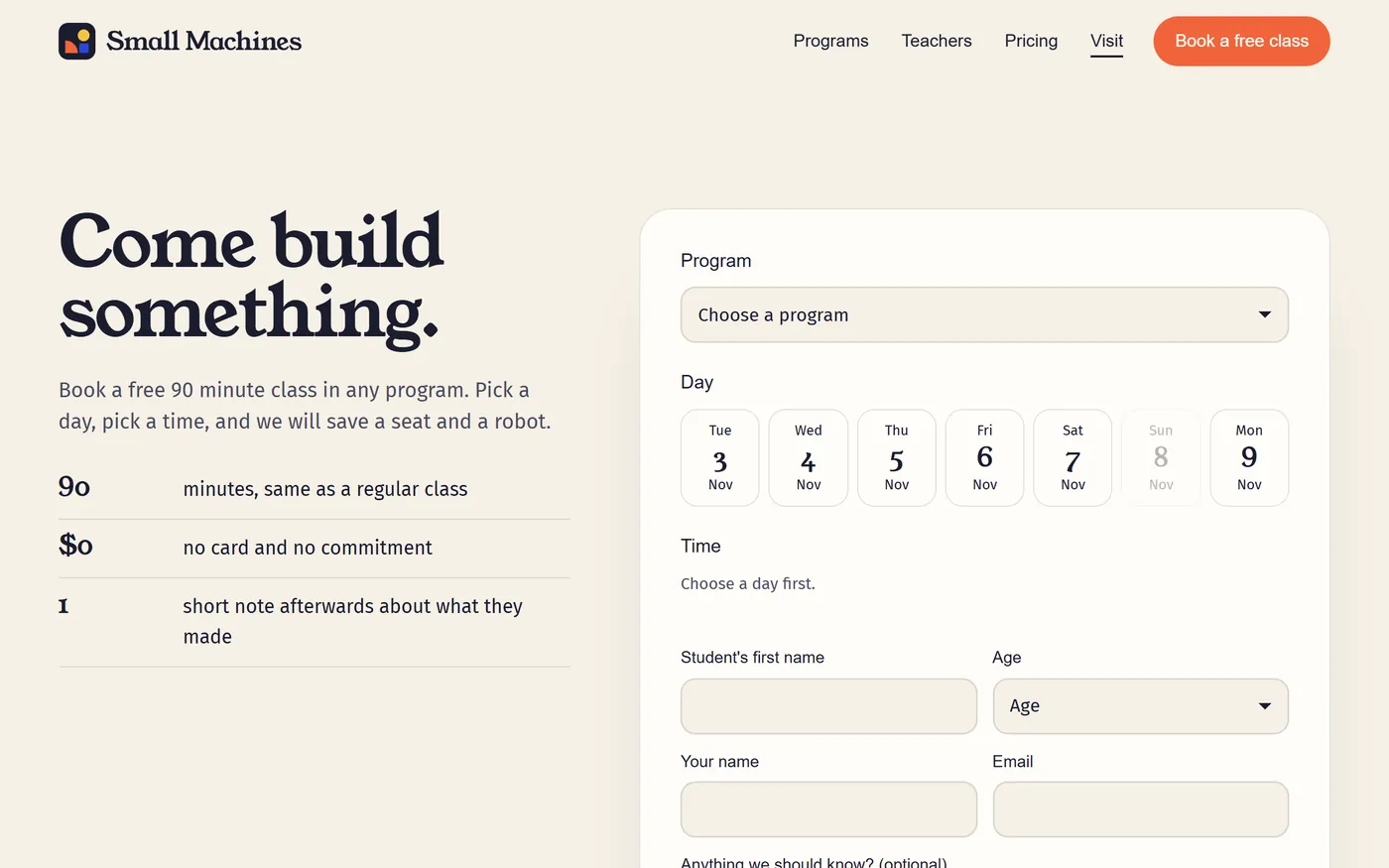
- Visits and tours, with a form or a booking that works at night, when parents have time.
- A calendar that is up to date.
- Communication with families: a newsletter, and news the school can publish without calling anyone.
- Reviews and a good Google profile, because parents search for the name of the school before they call.
- Campaigns for the enrollment season. Ads and landing pages for open days, if you sell them.
Who decides at a school
You will usually talk to more than one person. It helps to know what each one looks at:
| Who | What they care about | What to show them |
|---|---|---|
| The head of the school, or the owner | Enrollment, reputation and budget | How the site supports enrollment, the price and the date it goes online. |
| The admissions lead | Questions they answer again and again, and families who drop out along the way | The enrollment steps, the visit form and the answers to common questions. |
| Marketing or communications, if there is someone | Daily work, approvals and image | Who writes what, how many changes there are and how they will publish news. |
| The board or the owners | Cost and risk | A written proposal they can read without you in the room. |
In a small school the same person often holds all these roles. In a large one, ask early who approves the work and who signs. Both answers save you weeks later.
Schools also work on a calendar. The weeks of enrollment and exams are busy, and a new website is hard to approve then. Talk to them ahead of the enrollment season, so that the site is online when families start looking.
What to offer a school
Keep the offer short and describe each part by what it does for enrollment. These are the services you can sell with our studio behind you, and what they cost your agency:
| What you offer | What it does for a school | What your agency pays |
|---|---|---|
| The website, up to 15 pages | Home, admissions, programs, campus, calendar, team and contact | $2,400 |
| The website, 15 to 30 pages | The same, for a school with several levels or programs | $4,000 |
| The website, more than 30 pages | The same, for a larger school | $6,400 |
| Online booking | Visits and tours, with email confirmation | $300 once |
| Store or paid enrollment | Enrollments and courses, with online payment | $1,500 once |
| Email marketing | A monthly newsletter written and sent, a contact list and 3 automations | $199 a month |
| Reviews | Automatic review requests by SMS and email | $99 a month |
| Google Business | Optimized profile, 4 posts a month and replies to reviews | $149 a month |
| Chat 24/7 | Answers parents at any hour, in English and Spanish, captures details and books visits | $149 a month |
| Care maintenance | Backups, updates, security and up to 2 hours of small changes a month | $99 a month |
Here is an example of the arithmetic. A school buys a site of up to 15 pages with paid enrollment. You pay $2,400 plus $1,500, which is $3,900. If you sell it for $6,000, your margin is $2,100. The price is yours to set, and your market decides what it accepts. With three or more monthly services there is 15% off them.
Your strategy, your ads and your reports stay on your side. That is the part of the work that makes a school stay with you after the launch.
What a school website needs
Parents arrive with a few questions, and they read on their phones. A good school site answers them without making anyone search:
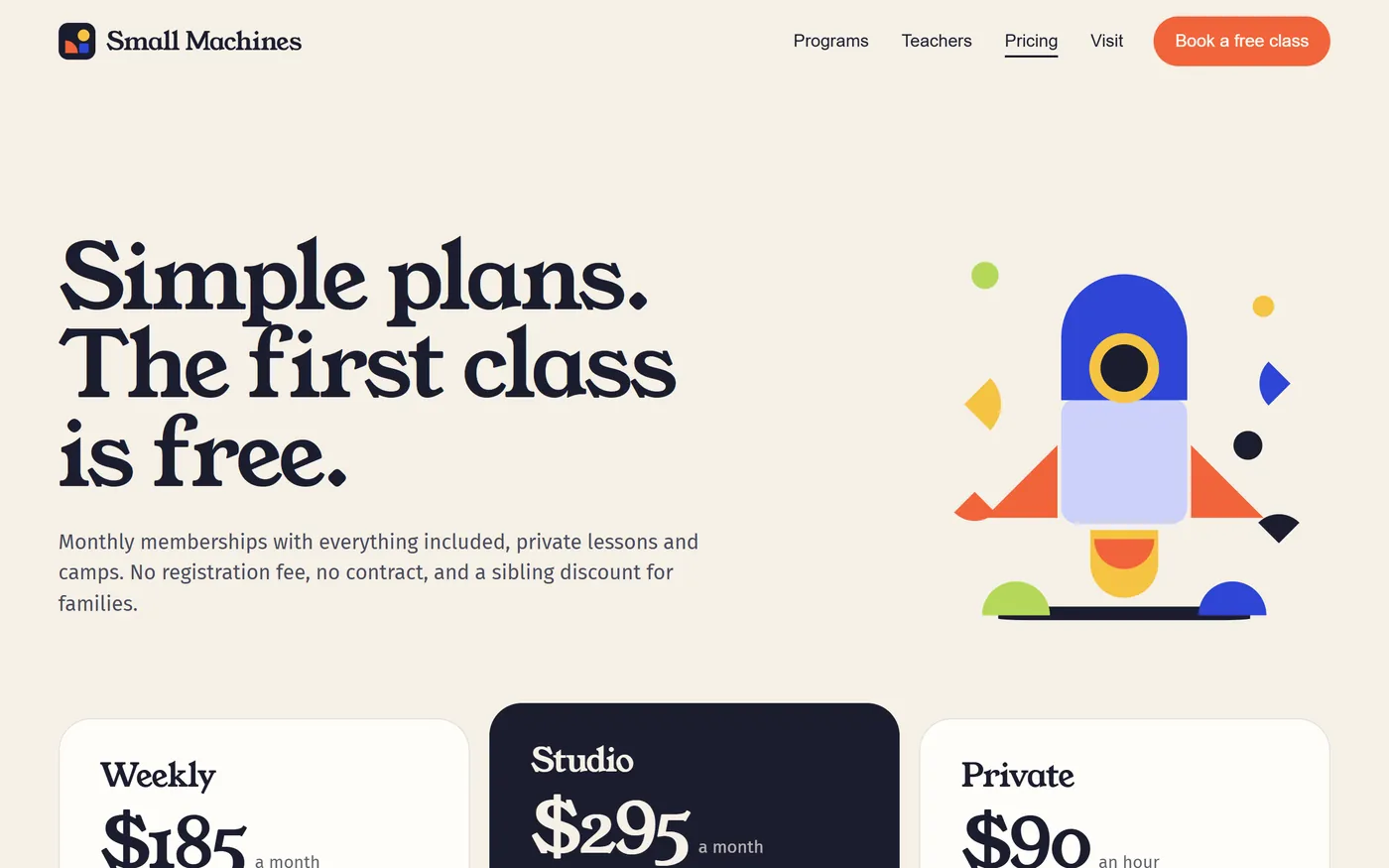
- The first screen says what the school is, for what ages and where it is, with one button to book a visit.
- Programs by age or level, each with what a child does there, in plain words.
- Admissions, with the steps, the dates and the documents, in order.
- Tuition, or a clear way to ask for it. Parents who cannot find it may leave without asking.
- The campus, with real photos or a video tour.
- The teachers, with their names and faces, if the school agrees.
- The calendar, kept up to date. An old date tells parents that nobody looks after the site.
- What other families say, with real reviews.

How to find schools and start the conversation
- Make a list by hand. Search for the type of school and your city on Google Maps. Note the name, the website, the phone number and the name of the head or the admissions lead, which are usually on the site.
- Look at each site as a parent would. On your phone, try to find the ages, the tuition, the next visit date and how to apply. Write down what you could not find.
- Write to one person, about one thing. The admissions lead feels the problem first, and the head decides. A short message with a real observation gets further than a brochure.
- Offer something useful. A short review of the site, at no cost, from the point of view of a parent.
- Follow up with care. Schools answer slowly, and the calendar explains a lot. Write again after a week or two, with something new to say.
A first message can look like this:
"Hi Laura, I was looking at schools for ages 11 to 14 in Tampa and found yours. On a phone, the button to book a visit is hard to find, and the admissions dates on the site are from last year. I work with schools on their websites and enrollment, and I made a short review for you, at no cost. Can I send it to you?"
For the rest of the conversation, how to show the problem and how to follow up, read how to sell websites to local businesses. It works the same way with a school.
How to present the proposal to a school
A school rarely decides in the first meeting, so your proposal has to work when you are not there. These points help:
- Open with what you found. The two or three problems a parent runs into on the current site, with a screenshot of each one.
- Tie each part to enrollment. The visit form, the admissions steps and the calendar, and what each one changes for a family.
- Give one price and one date. A clear price and a delivery date are easier to take to a board than a menu of options.
- Send a link they can forward. The head can pass it on to the owners or the board, and each person can open the design on a phone.
How to deliver without a design team
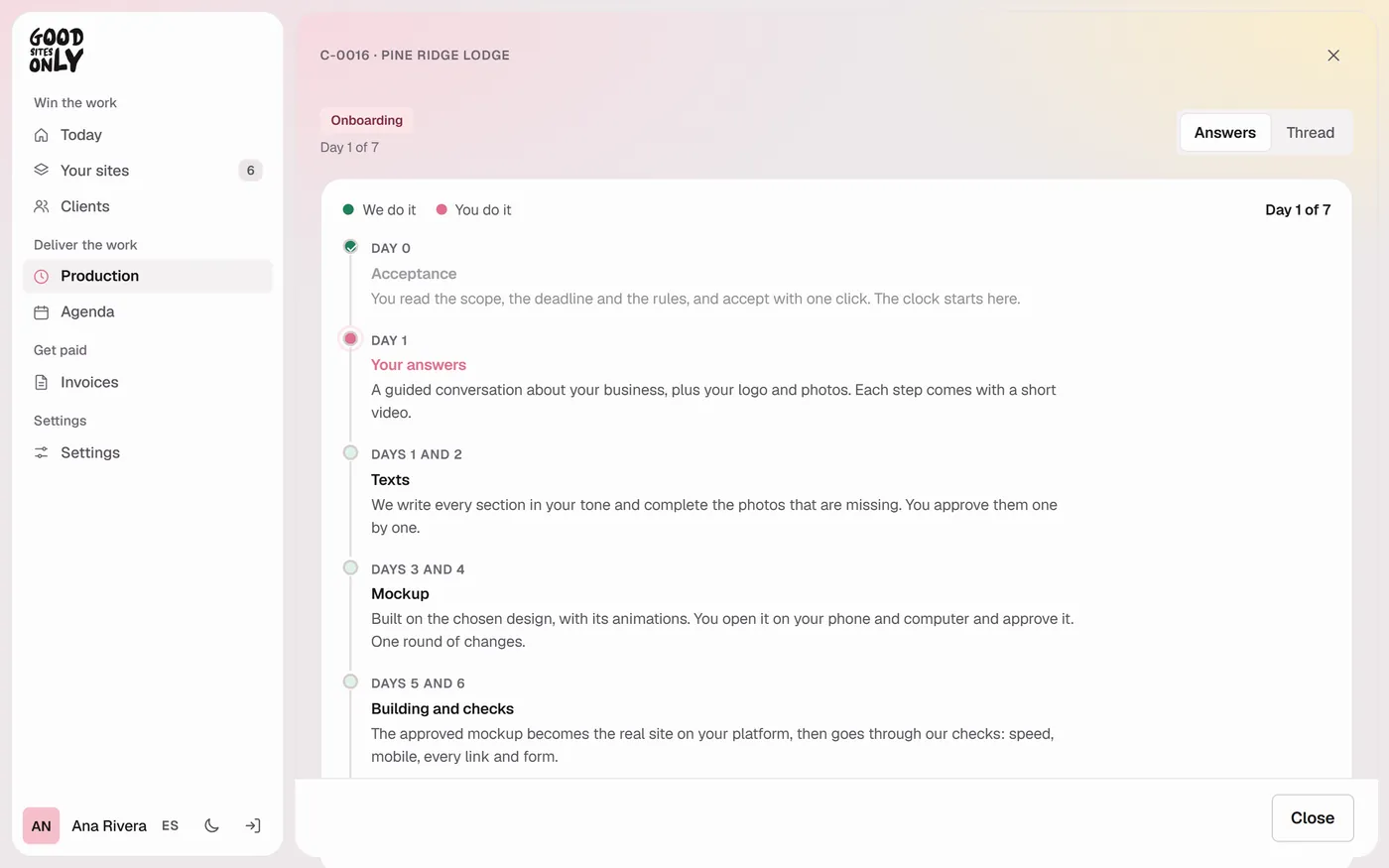
You sell the site and our studio builds it in 7 days. A school needs a few things to go well:
- Agree who approves. One person at the school gives you the answers and one person approves the texts and the mockup. A committee can take weeks over a single page, and the clock pauses while we wait for you.
- Gather the material early. The logo, photos, programs, dates, tuition and the documents for admissions.
- Plan around the calendar. Avoid starting the week before an open day, and leave time for the school to review.
- Follow the project from your panel. You see the stage, the answers, the files and the messages of each project.
What to be careful with
- Photos of students. Publish them only with the written permission of their families. Ask the school how it handles this before you touch any picture.
- Data about minors. Ask only for what the school needs on each form, and agree who receives it.
- Accessibility. Families and students of all abilities use the site. Check the rules that apply in the school's country, and read our basics of accessibility.
- Promises. Do not promise a number of enrollments. You can promise the work, and measure the visits and applications with the school.
Rules about minors and their data change from one country to another. The school should check them with its own legal advisor.
Questions about starting an agency for schools
Are schools a good industry for a new agency?
Yes, if you have patience. They have a clear measure, which is enrollment, and work that repeats every year. They also decide slowly, so plan for longer sales conversations.
Do I need experience in education?
No, though it helps. Having worked in a school, or having children in one, gives you the language and often the first contacts. Otherwise, talk to a few admissions leads and listen.
Who should I talk to first at a school?
The head of the school or the admissions lead. The admissions lead feels the problem each day, and the head usually decides.
When is the best time to sell to a school?
Ahead of the enrollment season, so that the site is online when families start looking. During enrollment and exams they have less time for you.
What pages does a school website need?
Home, admissions, programs, campus, calendar, team and contact, at least. Each one has to answer what parents ask, and all of them have to work on a phone.
How much should I charge a school for a website?
You decide. You pay $2,400, $4,000 or $6,400 per site with our studio, depending on the package. Look at what agencies near you ask for similar work.
Can a school take enrollment and payments on the site?
Yes. Store or paid enrollment is an extra of $1,500 that handles enrollments and courses with online payment.
Who writes the texts?
The studio writes them from the answers you send, and you approve them section by section with the school, with one round of changes.
How long does the site take?
7 days. The clock starts when you buy the site and pauses while we are waiting for you.
Should I sell to public schools?
Leave them for later. They usually buy through formal purchasing rules, and those processes are easier with examples to show.
Want to start your agency? Apply to the partner program